Leadership & Capability
Supporting and encouraging stronger leadership from financial institutions to drive progress on sustainable finance.
Leadership is critical to advancing sustainability.
ASFI’s Sustainable Finance Action Plan (2025-27) highlights the importance of supporting leadership and capability uplift across the finance sector to unlock progress towards Australia’s climate, environment and social inclusion ambitions.
Leadership is critical to sharpening organisational focus on sustainability, driving internal buy-in and culture, and facilitating action across the real economy.
Equally, building capabilities across all levels of finance sector professionals is key to ensuring individuals can navigate the rapidly evolving landscape of sustainable finance, understand emerging issues, and build the partnerships that will be needed.
Our Work
In 2023, our annual review of sustainable finance progress indicated less than 1 in 10 (7%) of financial professionals have green skills, lagging other industries critical to achieving global sustainability targets. Australia also has a lower concentration of green talent in the finance sector than countries such as US, Germany, UK & Canada
In more mature professions such as accounting, banking, and investment, complex ecosystems exist to support capability that include:
Universities providing a large range of undergraduate, post-graduate and executive education courses
Industry bodies that run accreditation systems for professionals including ongoing requirements for professional learning
A broad range of providers of courses that can count towards continuing professional development; and
A well-established pathway for people from university or other technical qualifications into the profession.
Given its early stage of development, the sustainable finance profession is yet to establish this sort of ecosystem. ASFI is uniquely placed to accelerate the development of a sustainable finance ecosystem to support capability development and underpin trust in and credibility of sustainable finance as a profession.
ASFI initiatives to strengthen finance sector leadership
-
Leadership in Practice
An evolution of ASFI’s Leadership Working Groups, the Leadership in Practice program focuses on the capabilities required to lead and implement change within organisations.
-
Mobilising Private Capital for Sustainability: Tools for Policymakers
This foundational course will equip policy professionals with a fundamental understanding of key levers for creating the conditions for private sector finance and investment in sustainability.
-
Australian Sustainable Finance Capability Framework
ASFI has developed a framework to guide institutions to to develop the mindsets, behaviours and skills needed to power the transformation required to deliver sustainable finance commitments and ambitions.
-
ASFI Learn
ASFI Learn offers educational opportunities for professionals at all proficiency levels, helping to build sustainable finance capability and accelerating the transition to a more sustainable, resilient and inclusive financial system.

Leadership & Capability Research
Prepared for Climate Action Week Sydney 2026, this ASFI background paper explores rising physical climate risks, the growing economic costs of disasters, and the role of the financial system in supporting investment in climate adaptation and resilience in Australia. It accompanied an industry event co-hosted with IAG
ASFI’s annual review of sustainable finance highlights continued progress and clear areas requiring action. The 2025 Progress Tracker shows meaningful progress on core reforms, and highlights the continuing need for financial institutions to deepen the integration of sustainability across governance, culture and performance frameworks.
Australia’s climate policy framework has evolved rapidly, and is starting to form a system that gives financial institutions the clarity and confidence to back the transition. Our latest paper, How elements of Australia’s climate architecture combine to enable private capital flows for climate mitigation, maps how the key components fit together.
Last year, ASFI released a pilot Sustainable Finance Capability Framework to help guide finance professionals and organisations to develop the skills, knowledge, and mindsets to advance sustainable finance. We’re pleased to share an updated version of the pilot Framework, incorporating valuable feedback from stakeholders across the sector.
ASFI is pleased to release a new report from Kaya Partners, Maximising Australia’s green growth: Leveraging trade and aid policy to drive Australia’s green exports agenda, setting out how Australia can work with our trade partners to jointly transition our heavy industries into a net zero world.
The past year has marked a period of significant progress for sustainable finance in Australia. Through collaborative effort and strategic action, we are beginning to see ambition translate into tangible outcomes, laying the foundation for a more sustainable, resilient and inclusive financial system. This Annual Report highlights these successes in 2024, achieved in partnership with our members and partners.

The Australian Sustainable Finance Action Plan 2025-2027 (‘Action Plan’) sharpens focus on 26 priority actions across 8 key domains for a financial system that supports a prosperous and inclusive economy, and a better future for all Australians.
Last week, we gathered on Gadigal Country to host the Australian Sustainable Finance Summit, bringing together experts, leaders, and changemakers committed to shaping a sustainable financial future.
The Global Nature Positive Summit, held in Sydney from 8-10 October, marked a pivotal moment in the intersection of nature conservation and business and finance interests. Read ASFI’s key takeaways from the Summit.
ASFI's Leadership Working Group has returned for 2024, bringing finance leaders together to exchange and develop strategies for transforming financial institutions so they can effectively deliver on their sustainability commitments.
The past year has seen some of the fastest momentum in the development of sustainable finance. This Annual Report highlights the focus ASFI has put into capitalising on this moment of opportunity, and the success we have achieved in working together with our members and other partners to advance our mission.
Over the past year, ASFI has continued to establish and strengthen partnerships across the financial system to drive the ambition and change needed to achieve our collective sustainability goals, and today we are delighted to share our annual strategy and business plan for 2024.
ASFI in partnership with Green Building Council of Australia (GBCA) have today released a practical guide to help demystify sustainable finance and its application for the real estate and finance sectors.
On 24 October 2023, at a sold-out summit, over 350 attendees from across finance, business, government, civil society, and academia came together to unpack this year’s theme; ‘driving ambition: Australia’s time to lead’.
ASFI is delighted to launch our 2023 Australian Sustainable Finance Progress Tracker. This is our third annual report on progress towards implementing the Australian Sustainable Finance Roadmap.
Today, we are pleased to have published our 2023 Mid-Year Report, which reflects on the work and progress we have achieved over the past 6 months and provides an outlook of our priority areas for the remainder of the year.
On 23 February, ASFI with the support of the Clean Energy Finance Corporation, Climate-KIC, Energy Efficiency Council, Green Building Council of Australia, and Race for 2030 convened a workshop on Finance for Home Retrofits. Read our report on the workshop outcomes.
This is the second report on implementation of the Roadmap. It shows progress has been made against a broad range of Roadmap recommendations, with some standout achievements including the establishment in 2021 of the Australian Sustainable Finance Institute (ASFI) as a permanent body to coordinate and drive Roadmap implementation.
Recent Insights

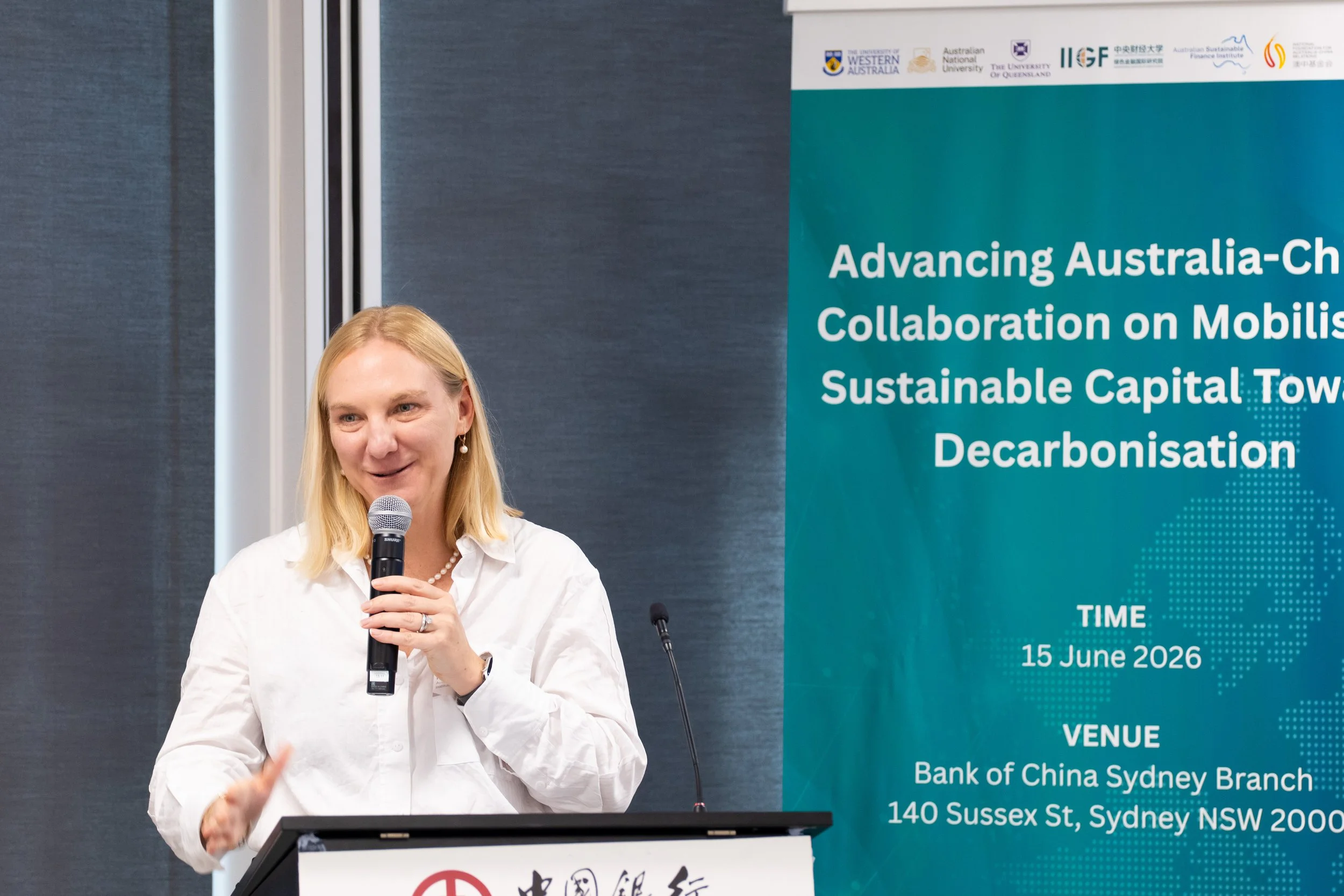
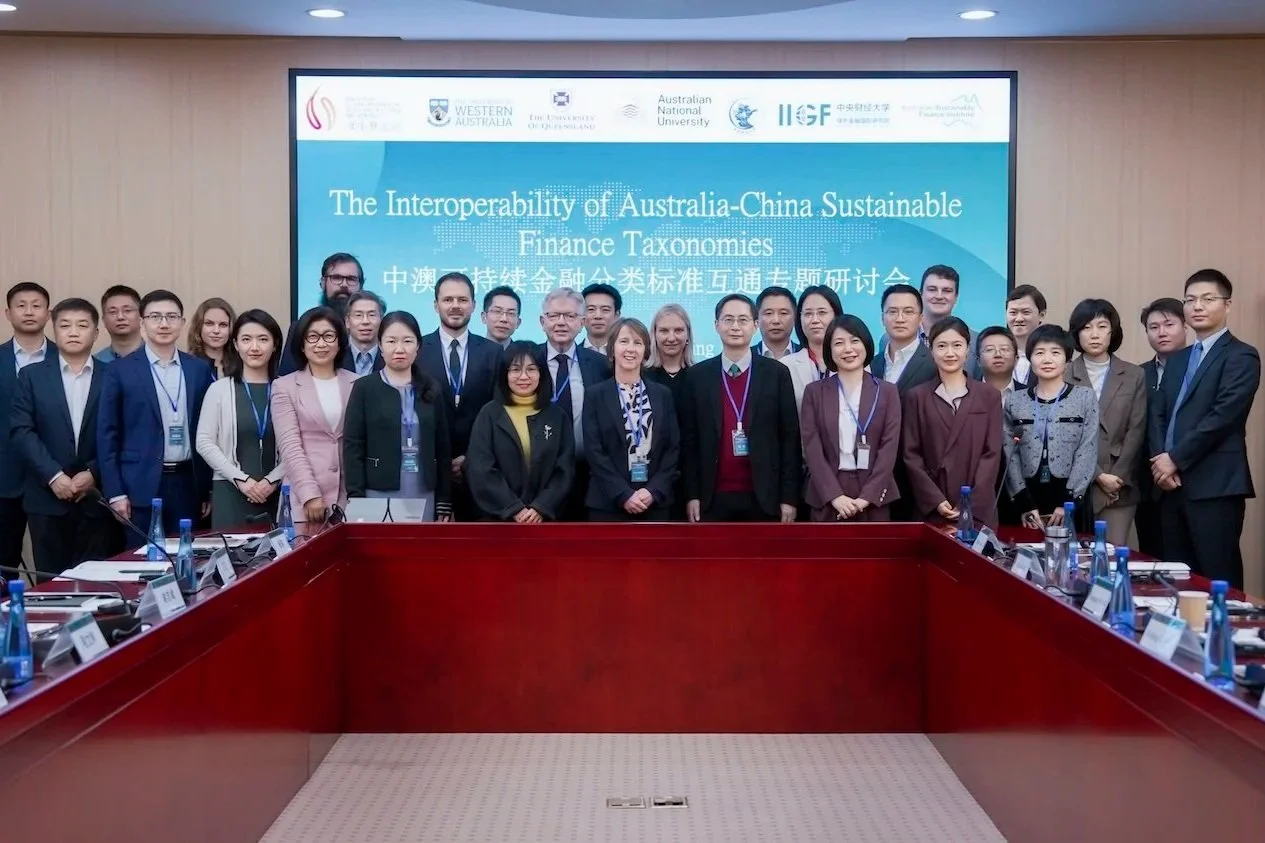
The final Sydney roundtable in the Australia-China sustainable finance dialogue series, supported by the National Foundation for Australia-China Relations, brought together practitioners from Government, finance, academia and the real economy to explore the path forward for sustainable finance cooperation.
The Australian Sustainable Finance Institute (ASFI) has appointed Zak May and David Atkin to its Board, alongside the reappointment of Jeff Brunton and Katharine Tapley.
The Australian Sustainable Finance Institute (ASFI) has today released ‘Priority Actions for Financing Adaptation & Resilience’, a report drawing on insights from a cross-sector convening held during Climate Action Week Sydney.
ASFI has appointed William McDonnell, Chief Financial Officer at IAG, as Chair of the ASFI Board. Mr McDonnell succeeds Kristian Fok, Chief Executive Officer of Cbus Super, who has served as Chair since the organisation was established in 2021.
This year-in-review reflects the twelve key system signals observed through ASFI’s engagement, analysis and collaborative work across 2025, highlighting where momentum is building, where challenges remain, and what these signals mean for 2026.
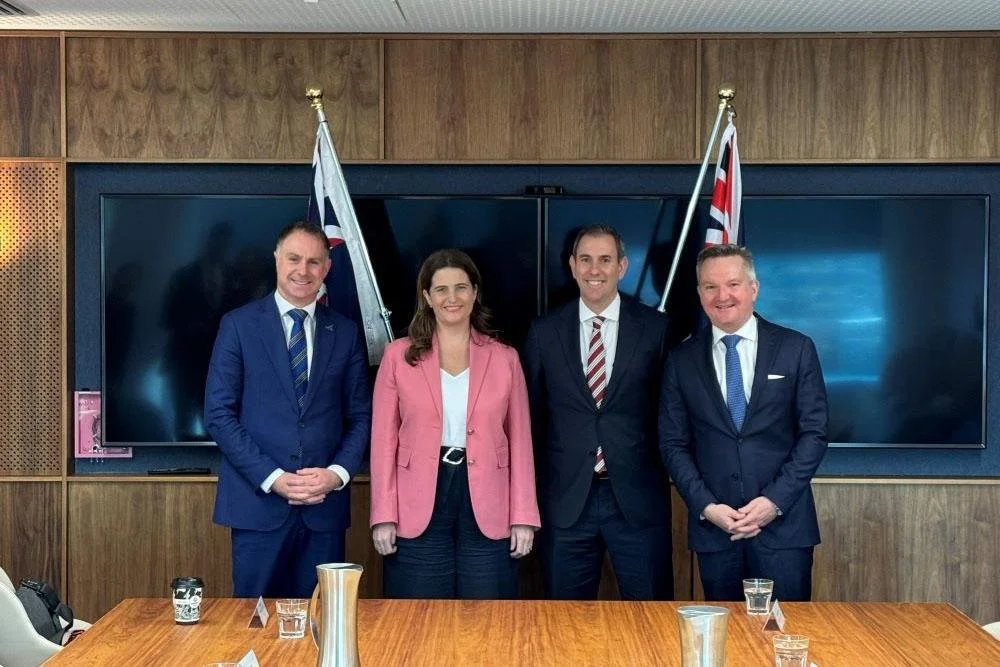
Australia and New Zealand have signalled a renewed commitment to regional cooperation on sustainable finance, following a joint statement from Ministers Chris Bowen and Simon Watts.
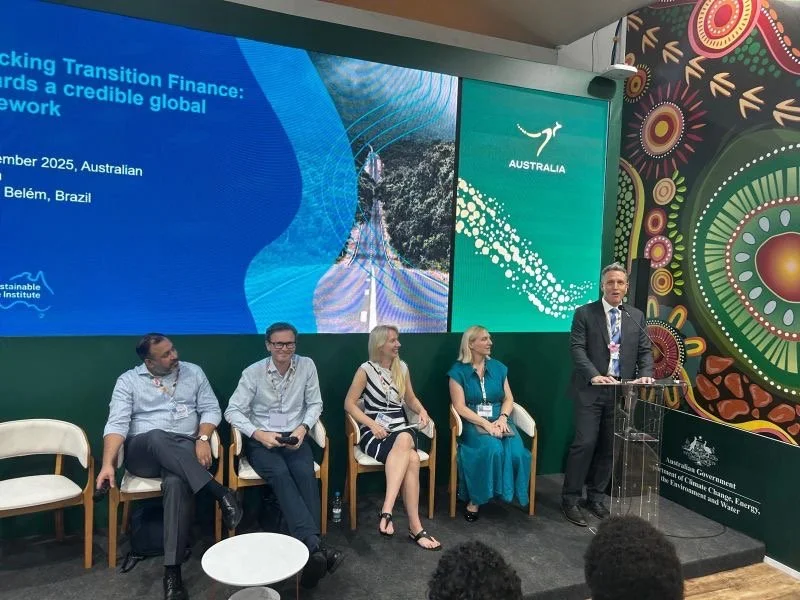
Transition finance dominated COP30, and ASFI returns with new insights to strengthen credible, science-based pathways for Australia’s transition.
ASFI, UK Finance and UKSIF convened members from both countries for a roundtable on credible transition finance. The conversation highlighted how Australia and the UK are taking different paths toward the same goal; aligning finance with science-based transition strategies that can deliver real-world impact.
Last week we had the privilege of bringing together hundreds of passionate finance, policy and sustainability leaders for the Australian Sustainable Finance Summit. Not to rehash the challenges we face, but to focus on the actions that come next.
Today, the Australian Sustainable Finance Institute (ASFI) is setting a new course for Australia’s trade – one that pivots national exports towards green commodities, while deepening Australia’s economic and strategic relationships with partners across the Indo-Pacific.
Today, business and finance groups have come together to endorse Australia’s continued bipartisan commitment to the Paris Agreement goals and call for all levels of government to continue to support Australia’s transition to a clean, competitive, resilient and prosperous net zero economy.
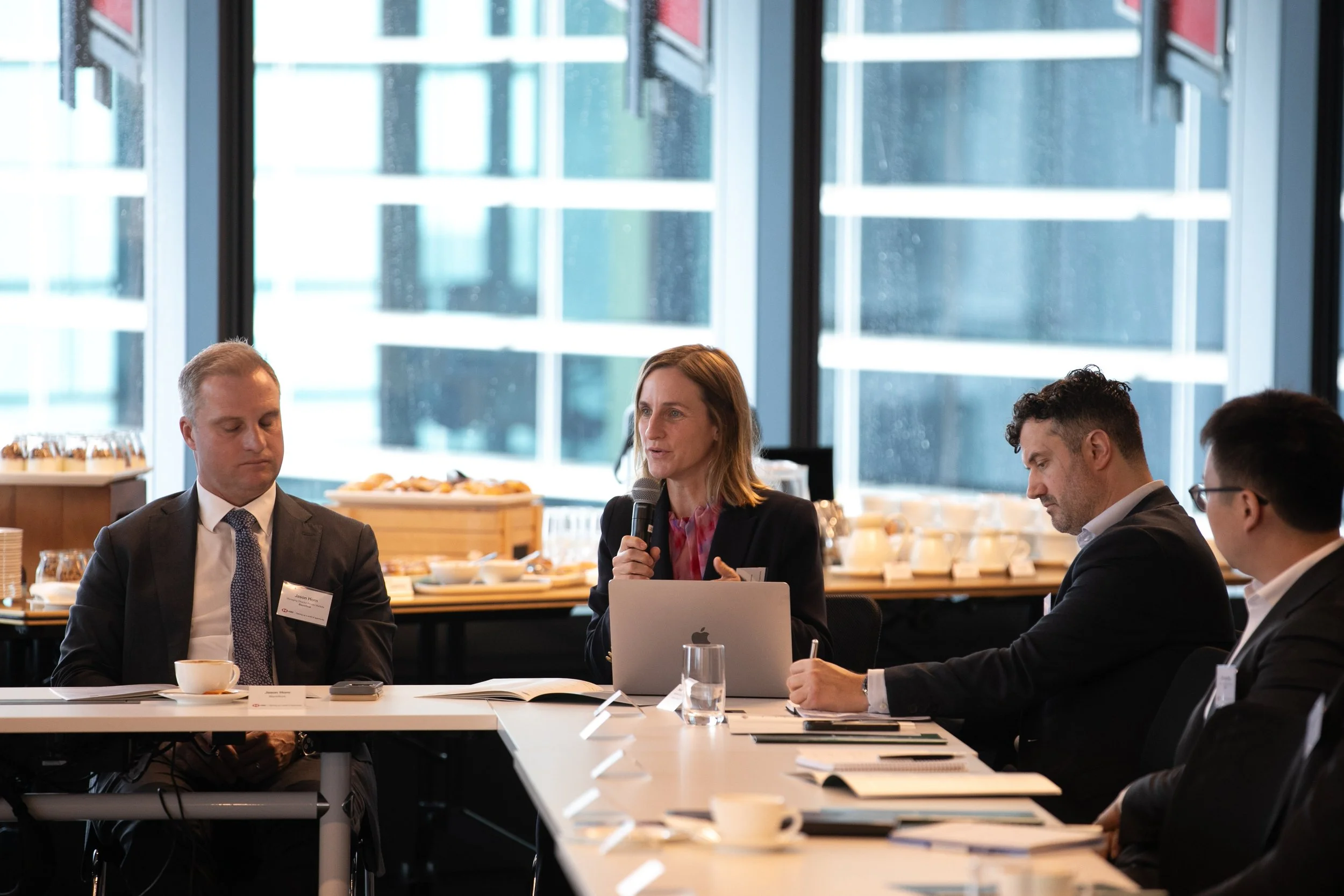
In 2024, the ASFI Leadership Working Group convened leaders from across the financial sector to address a vital question: how can we embed and mainstream sustainability within financial institutions? Over four in-person workshops, the group shared insights on barriers to advancing sustainability objectives, discussed key stakeholders and how to work with them, and identified actionable solutions to accelerate change.
Read ASFI’s reflections from this year’s UNFCCC Conference of the Parties (“COP29”), which wrapped up last week in Baku.
Last week, we gathered on Gadigal Country to host the Australian Sustainable Finance Summit, bringing together experts, leaders, and changemakers committed to shaping a sustainable financial future.
In the sidelines of the first Global Nature Positive Summit, ASFI jointly hosted together with the United Nations Environment Programme Finance Initiative (UNEP FI) and Westpac a roundtable discussion that focused on ways to shift private capital towards nature positive outcomes.
The Global Nature Positive Summit, held in Sydney from 8-10 October, marked a pivotal moment in the intersection of nature conservation and business and finance interests. Read ASFI’s key takeaways from the Summit.
The Australian Sustainable Finance Institute (ASFI) has today released its fourth annual Progress Tracker on the implementation of the Australian Sustainable Finance Roadmap.
ASFI's Leadership Working Group has returned for 2024, bringing finance leaders together to exchange and develop strategies for transforming financial institutions so they can effectively deliver on their sustainability commitments.
Work Programs
-
Public Policy
ASFI is actively engaging with the Australian Government on a range of policy areas to support the flow of finance and investment for climate, nature, and social outcomes in Australia.
Leveraging our deep public sector expertise and strong government relationships, ASFI drives and supports policy reform for better climate and sustainability outcomes.
-
Sustainability Standards and Practice
ASFI’s standards and practice work predominantly supports Australian financial institutions to pilot the Australian Sustainable Finance Taxonomy in practice.
ASFI works in partnership with the Australian Government and members to inform future guidance and uses, and on the international harmonisation of taxonomies.
ASFI is actively promoting Australia's approach to green and transition finance through a range of bilateral and multilateral fora, and as technical and private sector partner to the Australian Government.
-
Blended Finance
Blended finance, where public investment helps de-risk projects and crowd in private investment, is a key tool for decarbonisation and climate resilience. Effective blended finance structures to accelerate the flow of capital into projects and organisations that deliver sustainable outcomes.
This work program is being undertaken in partnership with Government, in particular the Department of Foreign Affairs and Trade (DFAT), and the ACCC has granted ASFI formal authorisation to work with institutions and governments on co-designing new blended finance structures.
-
Leadership and Capability
ASFI is committed to embedding sustainability into leadership and practice across the financial services landscape, and is actively working to unlock financial institution skills, leadership, and ambition on sustainable finance.
Leadership is critical to sharpening organisational focus on sustainability, driving internal buy-in and culture, and facilitating action across the real economy. ASFI works in partnership with the Australian Government, members and others to deliver targeted courses, mentor programs, working groups, member delegations and a Capability Framework.
-
First Nations and Finance
ASFI is positioned to act as a partner to First Nations-led businesses, Peaks, projects, Nations and communities, as lasting impact depends on First Nations leadership being centred and supported, not substituted.
This approach embeds First Nations rights in financial decision-making; increases access to finance and support for First Nations communities and businesses; elevates First Nations perspectives and priorities across Australia’s financial system; and ensures more First Nations peoples in Australia benefit from economic self-determination.