Australia-China Roadmap highlights a path forward for sustainable finance cooperation
The final Sydney roundtable in the Australia-China sustainable finance dialogue series, supported by the National Foundation for Australia-China Relations, brought together practitioners from Government, finance, academia and the real economy to explore the path forward for sustainable finance cooperation.
Representatives from Australia and China have completed a four-part sustainable finance dialogue series with the foundation partners from both jurisdictions launching a Roadmap of practical steps that the two jurisdictions could take to support sustainable capital flows between the two markets.
Sydney Roundtable concludes four-part dialogue series
Held on Monday 15 June 2026, the Sydney Roundtable marked the fourth and final engagement in a National Foundation for Australia-China Relations funded project, convened by a consortium of partners, including the Australian Sustainable Finance Institute (ASFI), International Institute of Green Finance of the Central University of Finance and Economics (China), the Institute for Finance and Sustainability (Beijing), the University of Western Australia, the University of Queensland and The Australian National University.
The project explored how sustainable finance frameworks in Australia and China can be better understood, compared and applied to support credible sustainable investment across borders, with a focus on taxonomy interoperability, transition finance, green trade, the development of low-carbon supply chains and the growing finance gap for adaptation and resilience.
Building on earlier roundtable discussions in Canberra, Beijing and Hong Kong SAR, the Sydney roundtable provided an opportunity to reflect on shared learnings gained throughout the series, and for the consortium partners to launch the Australia-China Sustainable Finance Roadmap.
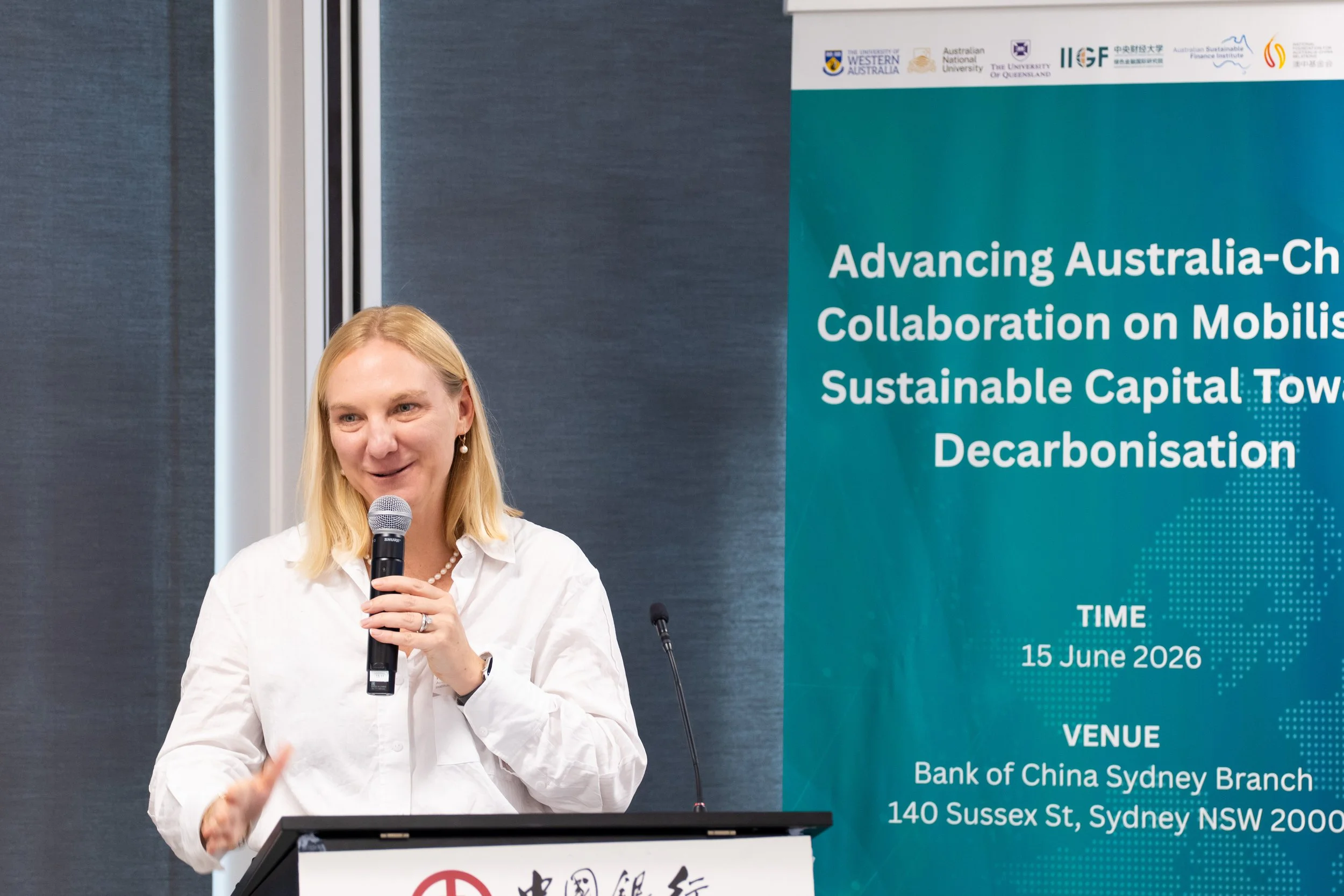
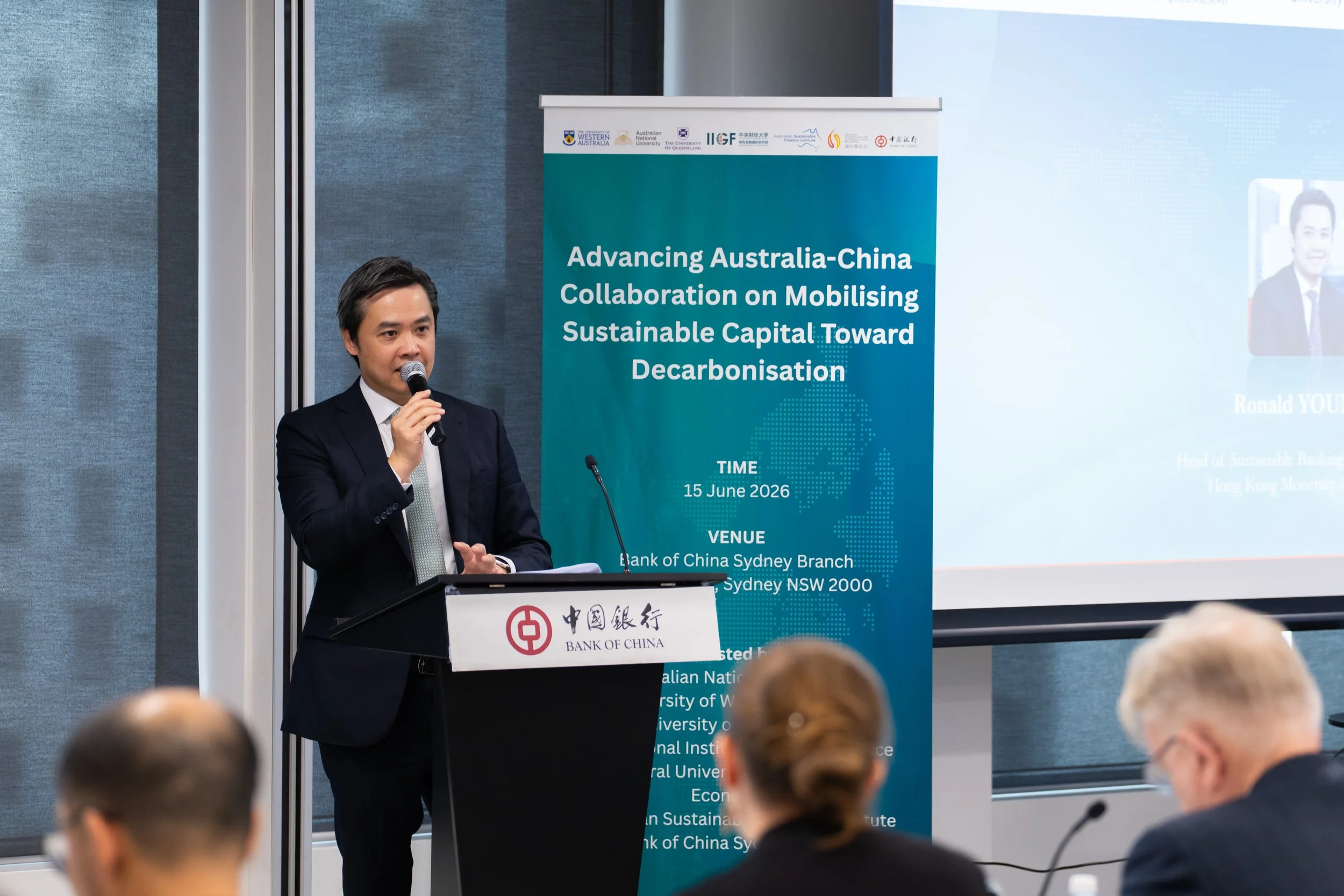
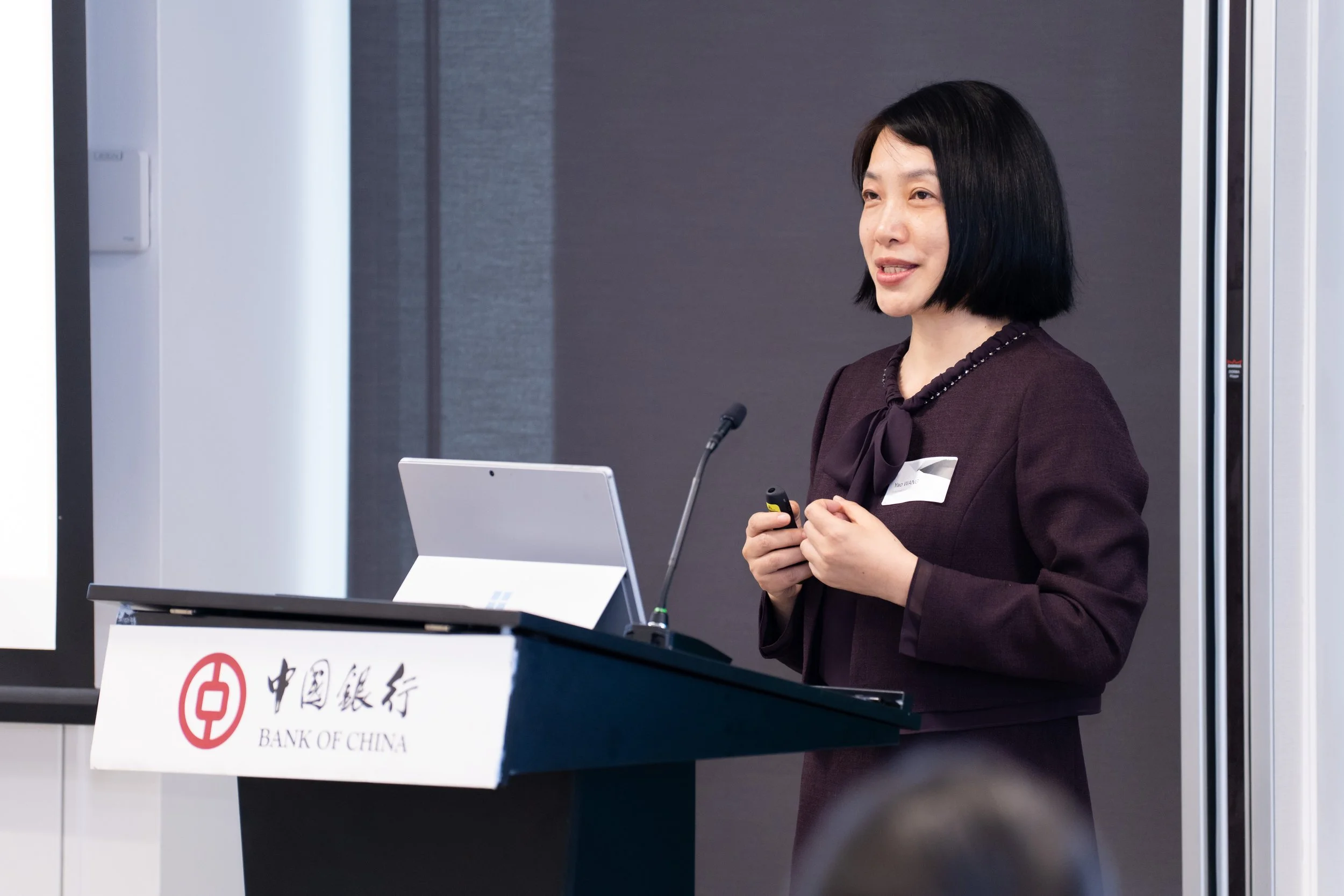
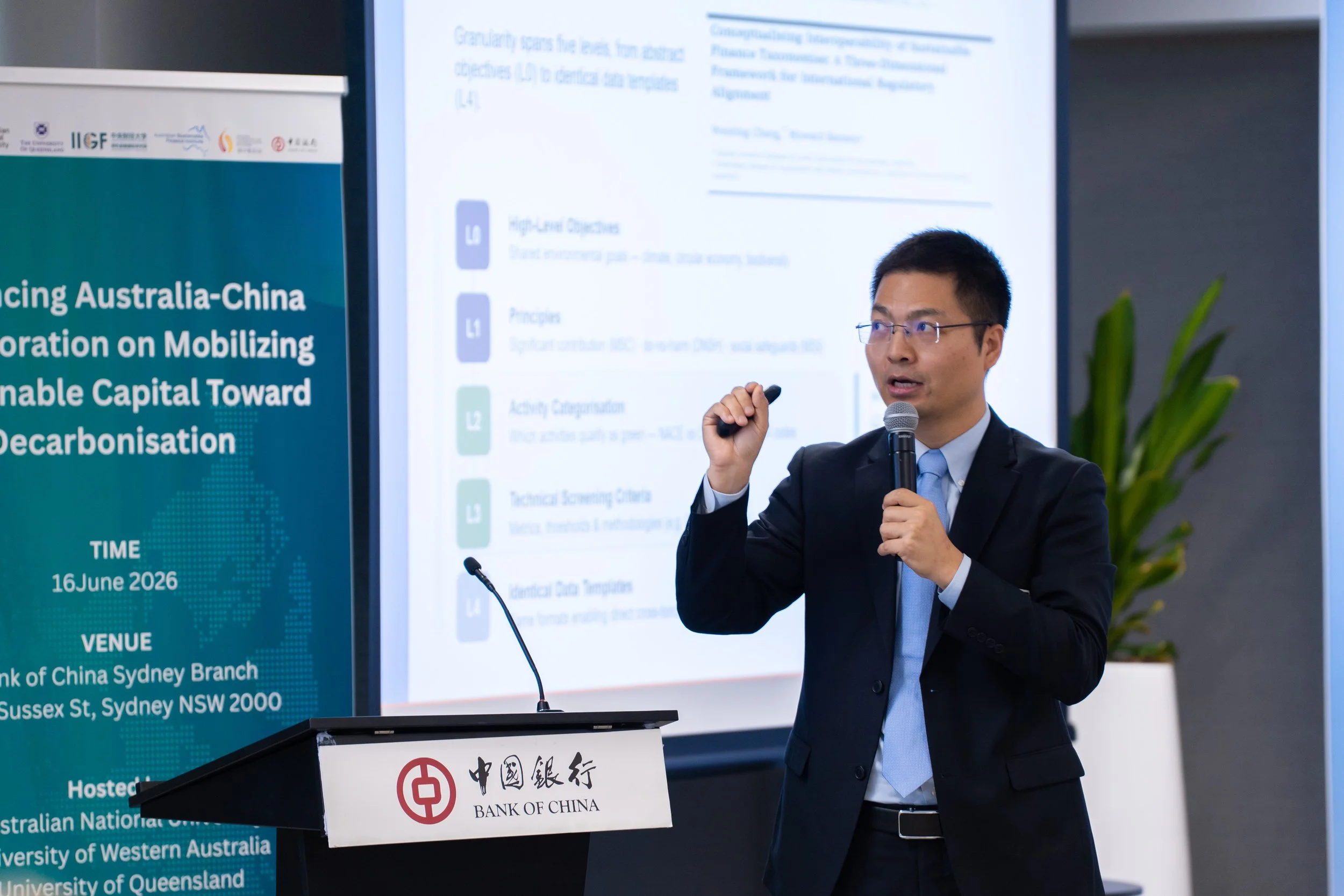
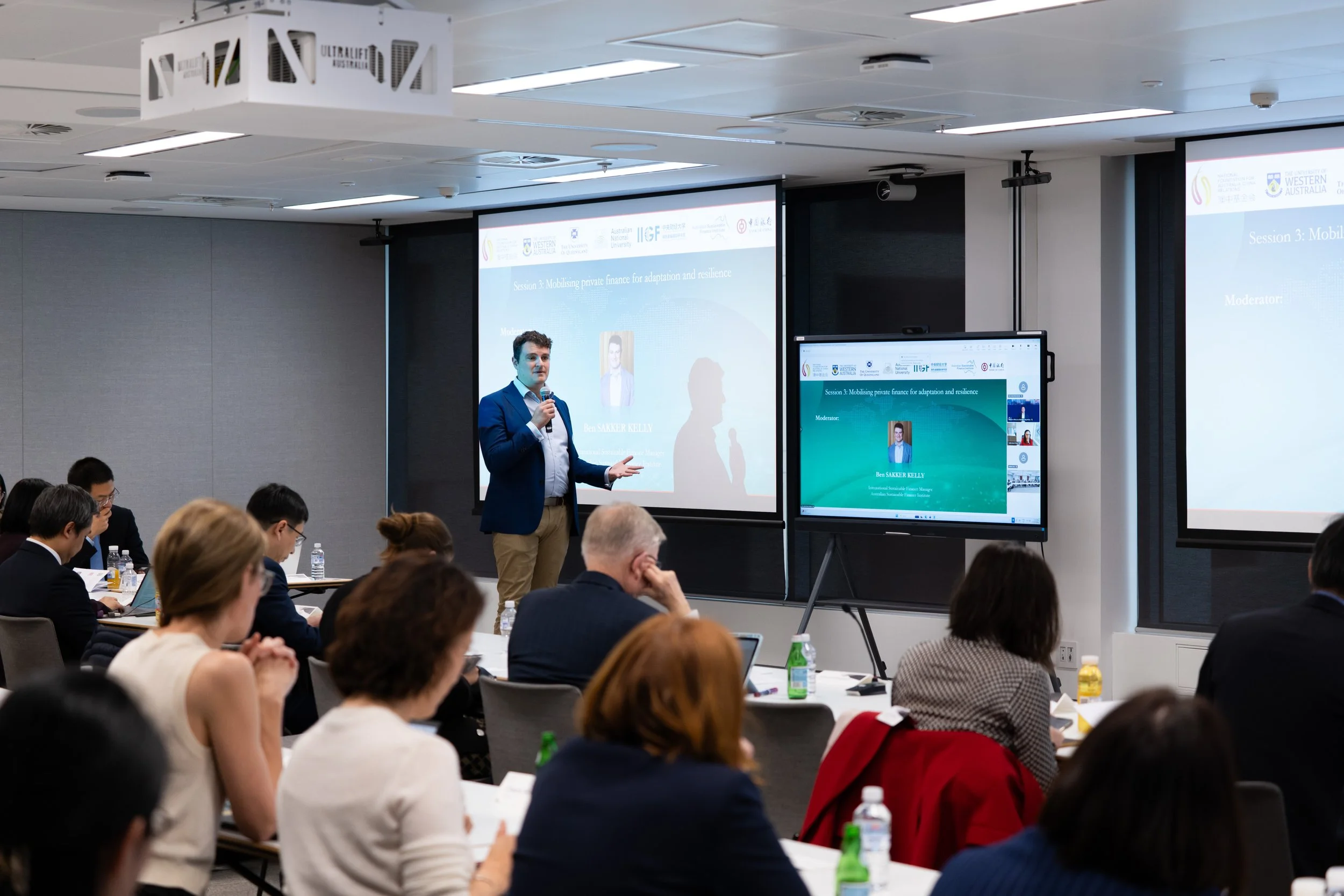
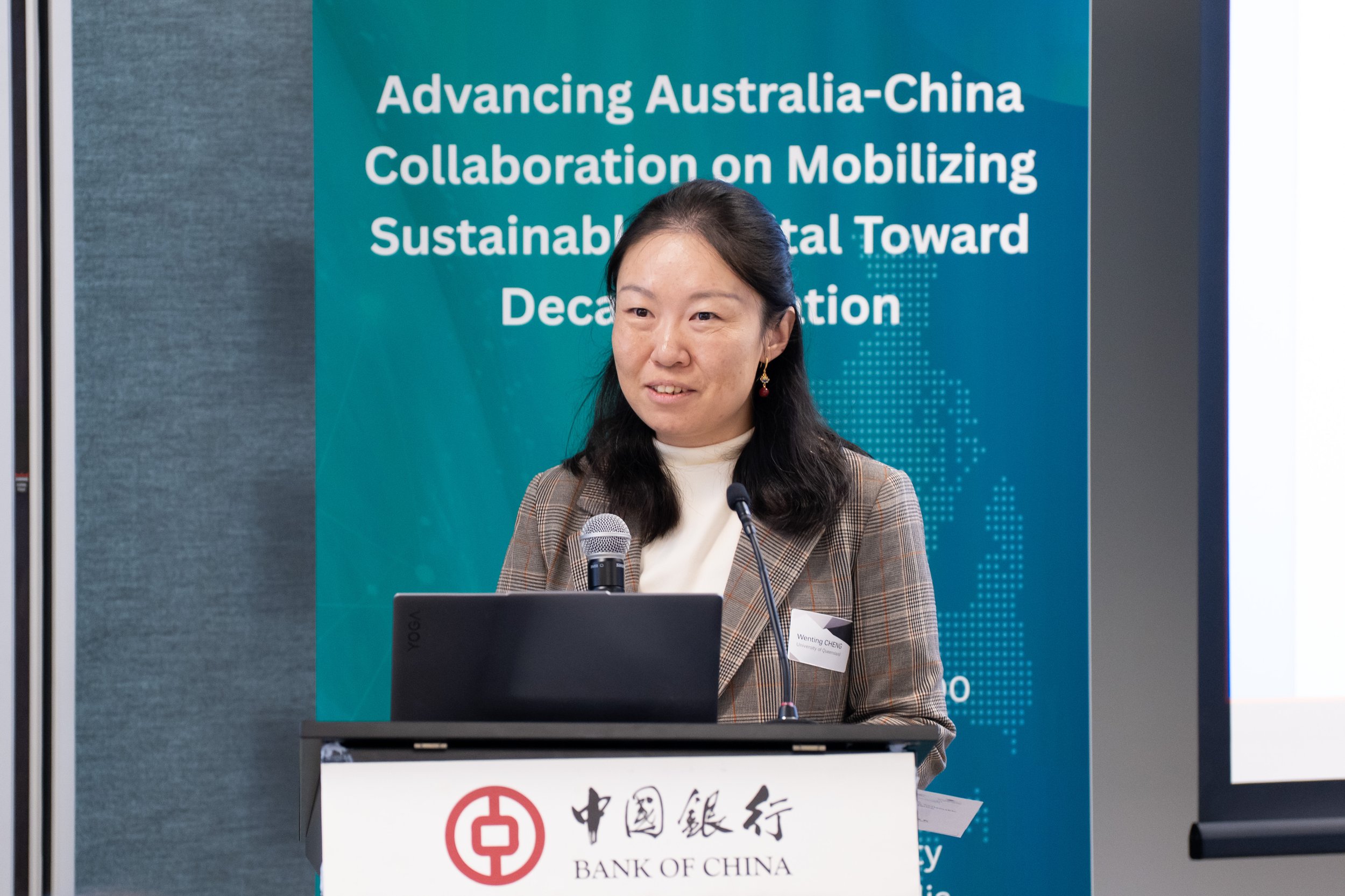
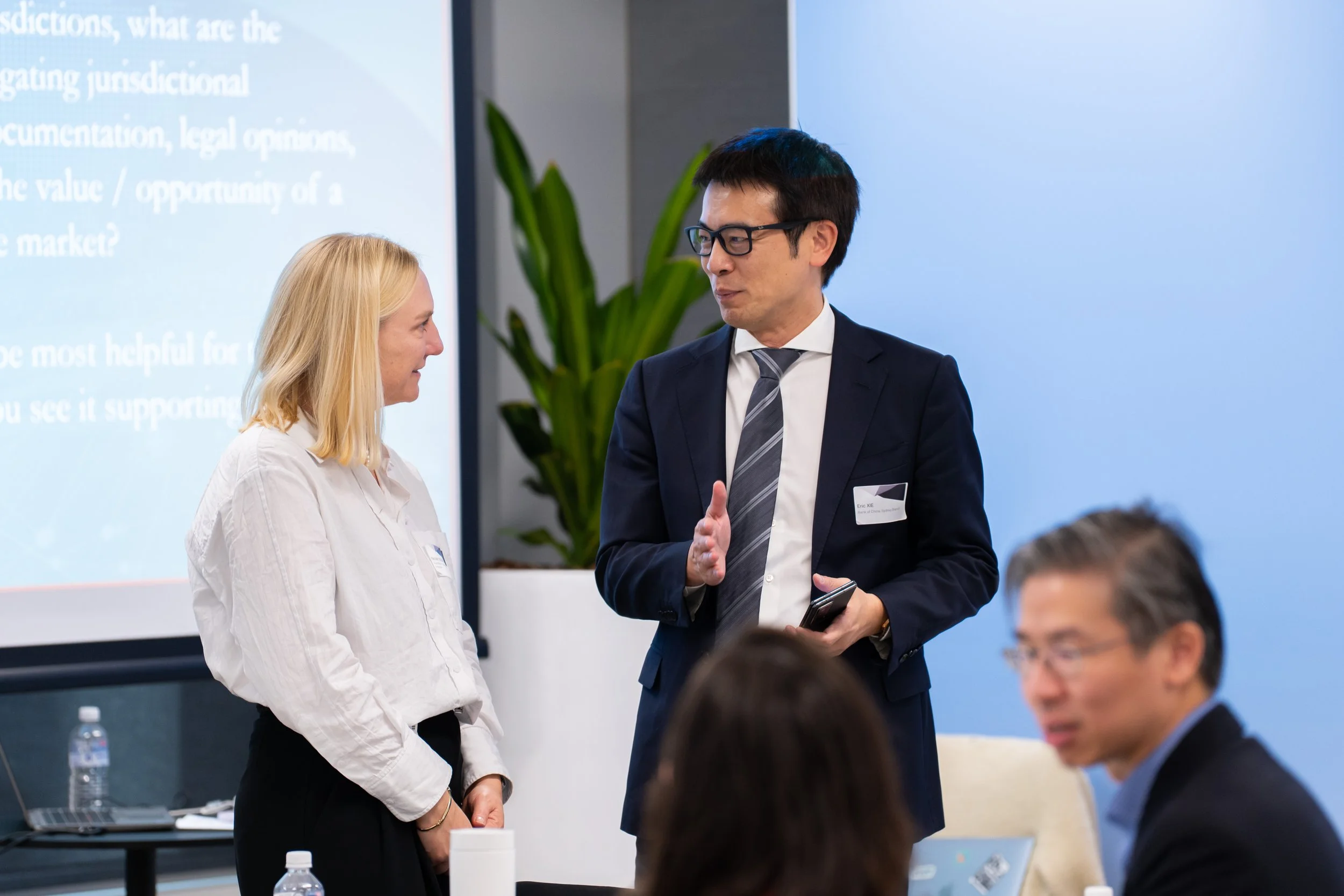
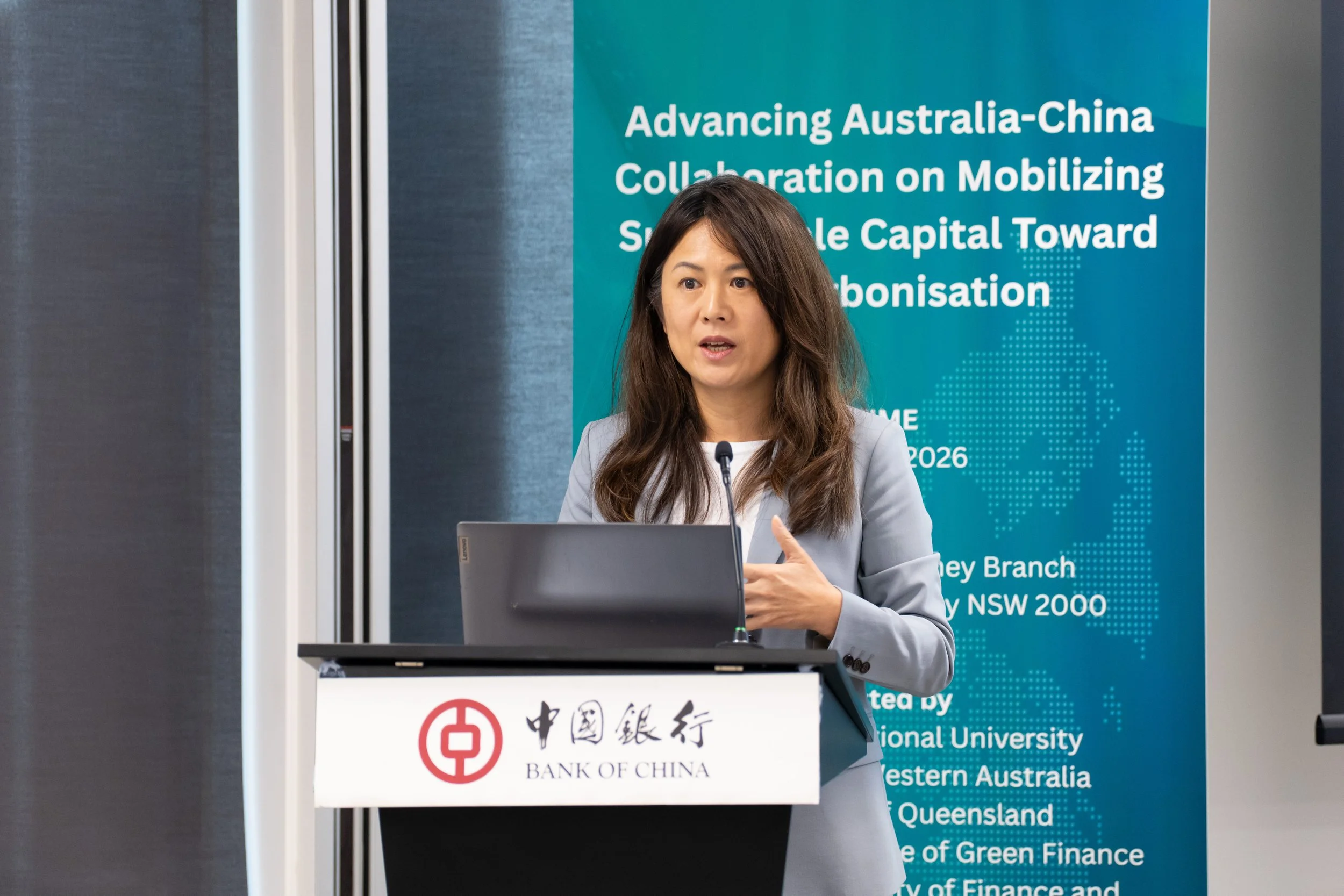
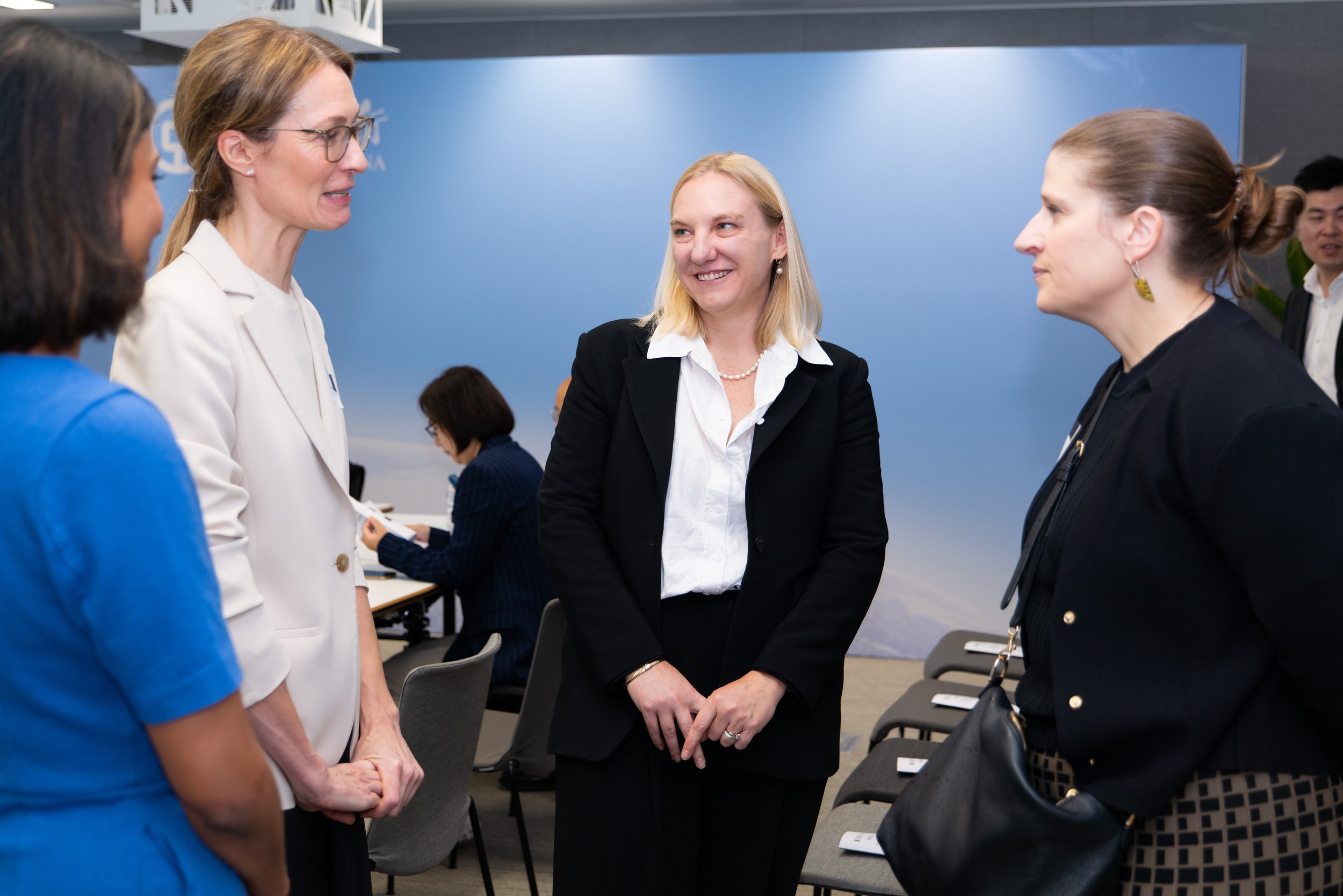
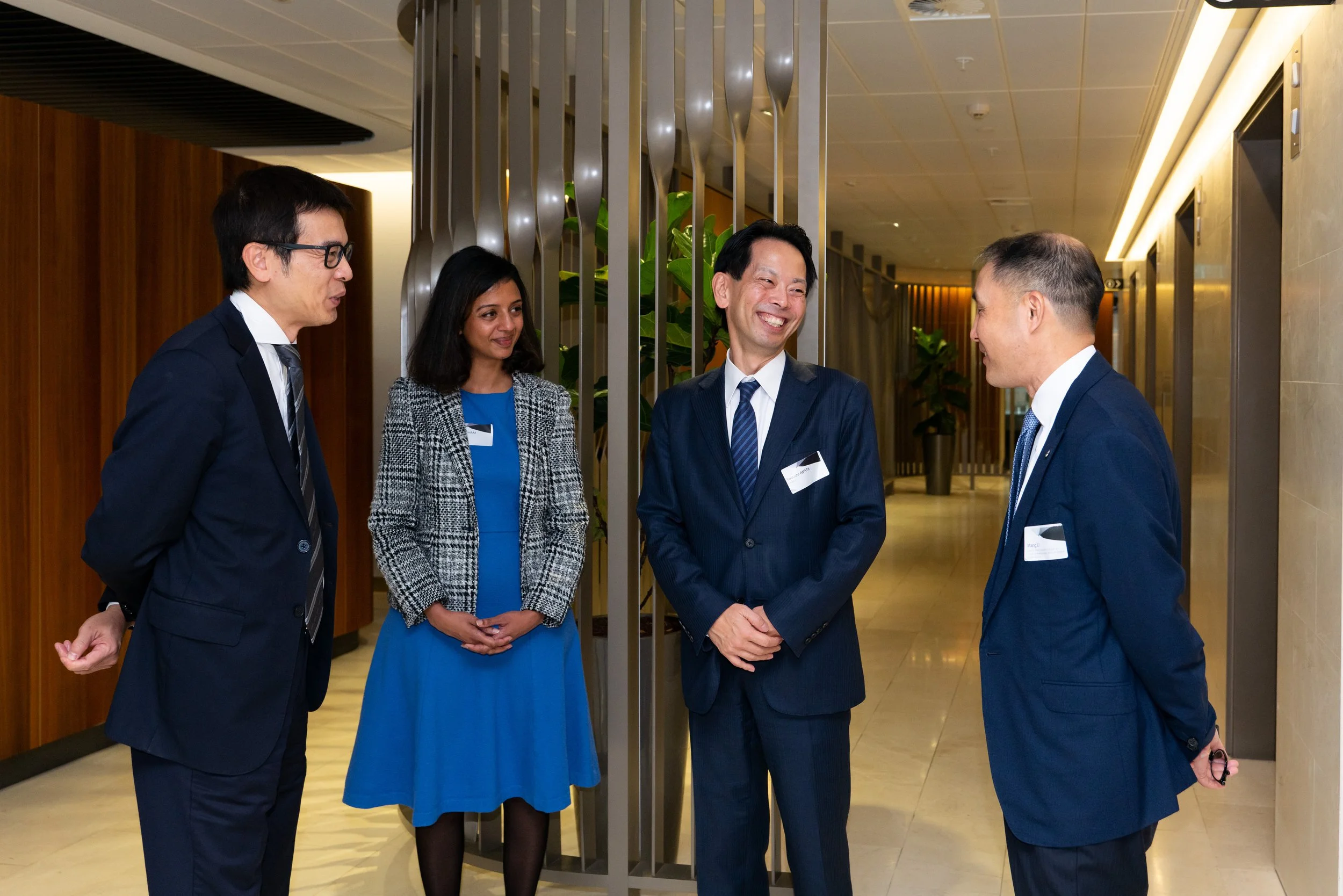
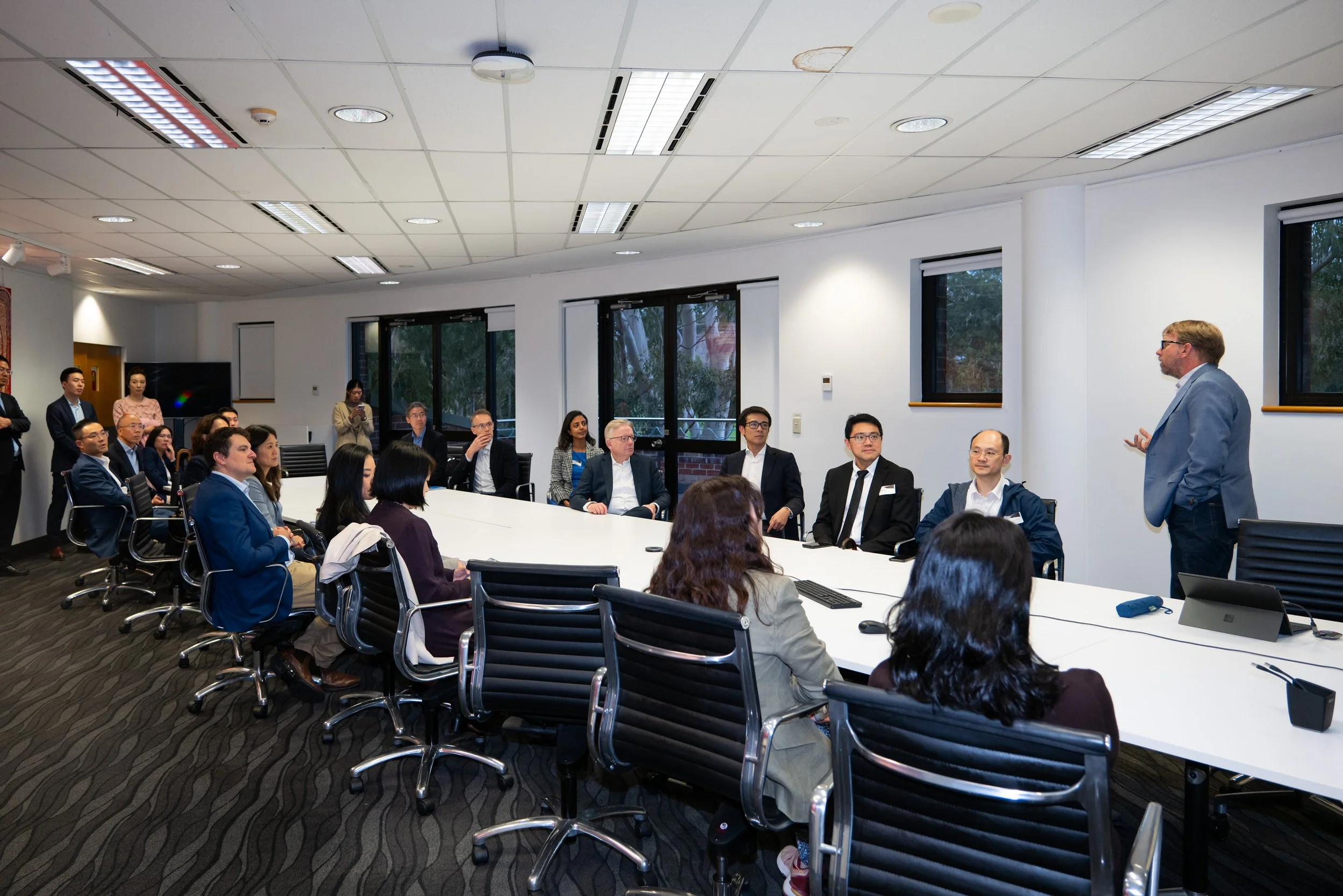
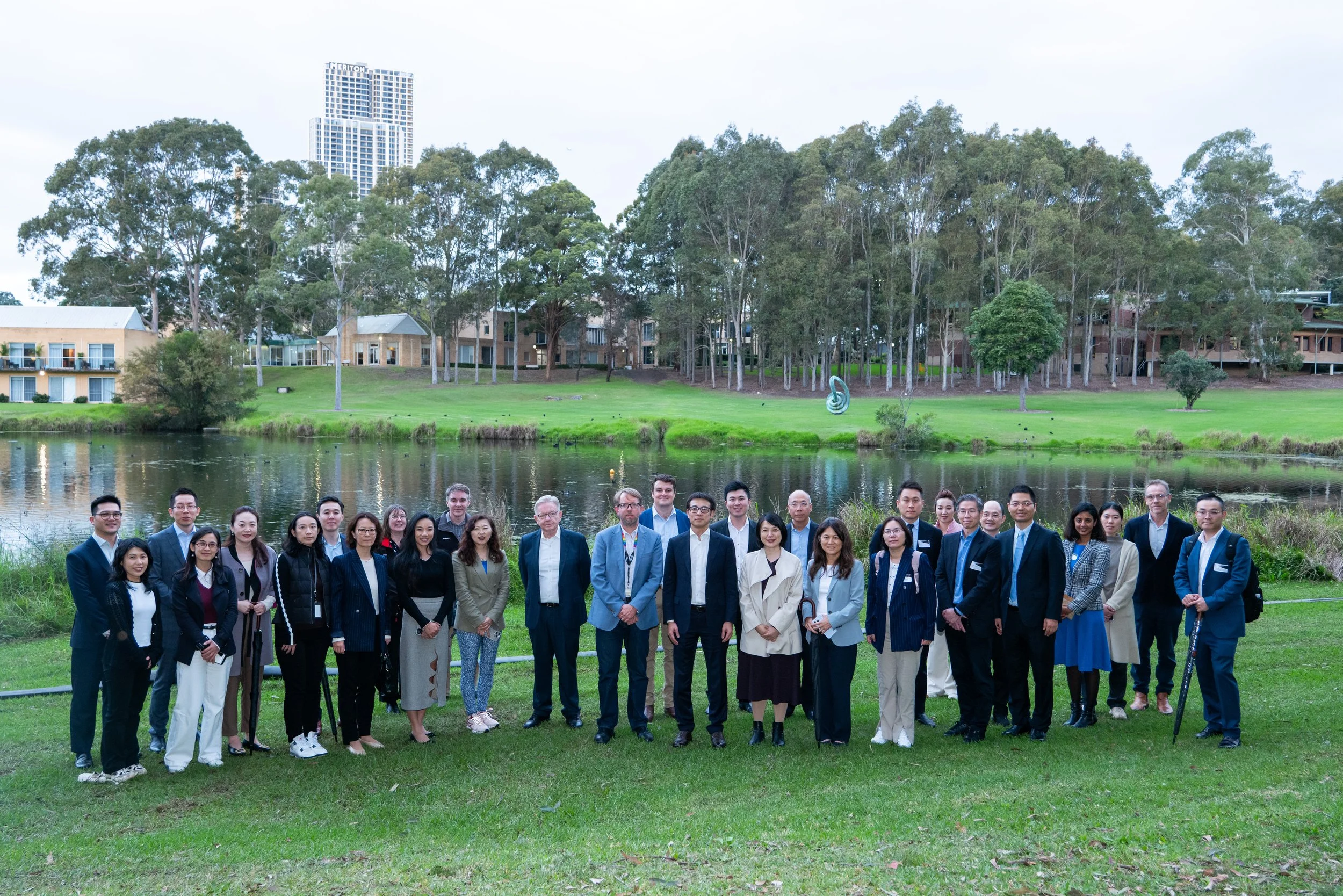
Throughout the dialogue series, practitioners from Government, finance, the real economy and academia developed closer relationships and deepened bilateral collaboration on sustainable capital flows. Participants examined how taxonomies can support cross-border transactions, how clearer market guidance can improve credibility and investor confidence and how transition finance criteria can help decarbonise hard to abate sectors such as iron and steel.
The Sydney discussion also broadened the lens to climate adaptation and resilience, recognising that as climate impacts become more material, sustainable finance cooperation will need to address not only the transition of emissions-intensive supply chains, but also the capital needed to strengthen economic and community resilience.
“Across this project, one message has come through very clearly – sustainable finance frameworks are most useful when they can be applied in practice, across markets and with confidence,” said ASFI Executive Manager – Standards & Market Practice, Nicole Yazbek-Martin.
“Australia and China have deeply connected trade and investment relationships, including in sectors that will be central to the global transition. Greater interoperability between our taxonomies can help give investors, lenders and project proponents clearer signals about credible and green transition activities.”
Australia-China Roadmap sets out recommendations
Building on the shared interests and priority areas outlined in the Roundtables, the Australia–China Sustainable Finance Roadmap aims to provide a structured, forward-looking framework to guide bilateral cooperation. Its vision is to establish a resilient and scalable foundation for sustainable finance that drives green growth, accelerates the transition to net-zero emissions, and deepens Australia–China collaboration on advancing decarbonisation towards global climate goals.
The Australia-China Sustainable Finance Roadmap makes four recommendations for the next phase of bilateral sustainable finance cooperation:
Recommendation 1: Join and expand the MCGT or any equivalent future mechanism
The Australia-China Sustainable Finance Roadmap recommends the Australian Government work with China and other regional partners to join and expand the Multi-Jurisdictional Common Ground taxonomy (MCGT), or an equivalent future mechanism, to support clearer comparison between sustainable finance taxonomies across the region.
It also recommends exploring how this mechanism could expanded to transition finance, particularly given the strong comparability between approaches in Australia, Singapore and Hong Kong SAR.
Recommendation 2: Conduct a bilateral investigation into market information needs for the practical interoperability of Sustainable Finance Taxonomies in Australia and China
The Australia-China Sustainable Finance Roadmap recommends a bilateral investigation into what guidance is needed to make taxonomy interoperability practical noting that inconsistencies in activity-level interpretation significantly increase due-diligence costs for investors.
Discussions in Beijing and Hong Kong SAR highlighted that taxonomy application can stall when financial institutions lack clear, operational information on how to label, verify, and document eligible activities in practice. Clearer guidance could help reduce due diligence costs and support more consistent activity-level interpretation across markets.
Recommendation 3: Collaborate on transition finance criteria for green iron and steel
The Australia-China Sustainable Finance Roadmap recommends continued dialogue between ASFI, relevant technical standards bodies and the International Institute of Green Finance to explore greater interoperability between Australian and Chinese definitions for green iron and steelmaking.
It identifies that the Hebei Province transition finance pilot for green steel as a practical opportunity to initiate this discussion, alongside broader technical-level between Chinese and Australian industry participants.
Recommendation 4: Establish a sustainable finance workstream of the Strategic Economic Dialogue between China and Australia
The Australia-China Sustainable Finance Roadmap recommends evolving the current project-based roundtables into a routine sustainable finance workstream within the Australia-China Strategic Economic Dialogue. This would create a more regular forum for engagement between policy makers, financial institutions, industry practitioners and academia, helping to reduce market fragmentation, and deepen trust and understanding.
A dedicated workstream could also support continued blended finance cooperation, particularly where public, concessional or catalytic capital is needed to mobilise private capital into priority areas.
From high-level alignment to practical application
Together, the recommendations reflect a shift from a high-level alignment toward the more practical architecture needed to support cross-border sustainable capital flows. That is, comparable and interoperable taxonomies, clear market guidance, credible and well defined green and transition criteria, and ongoing bilateral engagement.
As ASFI Chief Executive Officer Kristy Graham noted:
“The recent Australia-China Strategic Economic Dialogue confirmed that taxonomy interoperability is already part of the bilateral economic conversation, with both countries progressing work to identify commonalities across sustainable finance taxonomies.”
“This is important as sustainable finance frameworks are no longer abstract policy architecture, they are becoming practical tools to help compare green investment opportunities, support cross-border capital flows and give market participants greater confidence in the transition.”
“This Roadmap helps continue that momentum by proposing a dedicated sustainable finance workstream that can bring policymakers, financial institutions, industry and academia into more regular dialogue. That kind of ongoing engagement will support taxonomy interoperability, green iron and steel decarbonisation and the mobilisation of capital into climate adaptation and resilience across Australia and China.”