Financing adaptation and resilience is essential to Australia’s long term economic prosperity
ASFI is building the tools to identify climate adaptation investments and actions across the whole economy that can lower systemic risk and build long-term resilience.
Climate risk is already
affecting the financial system
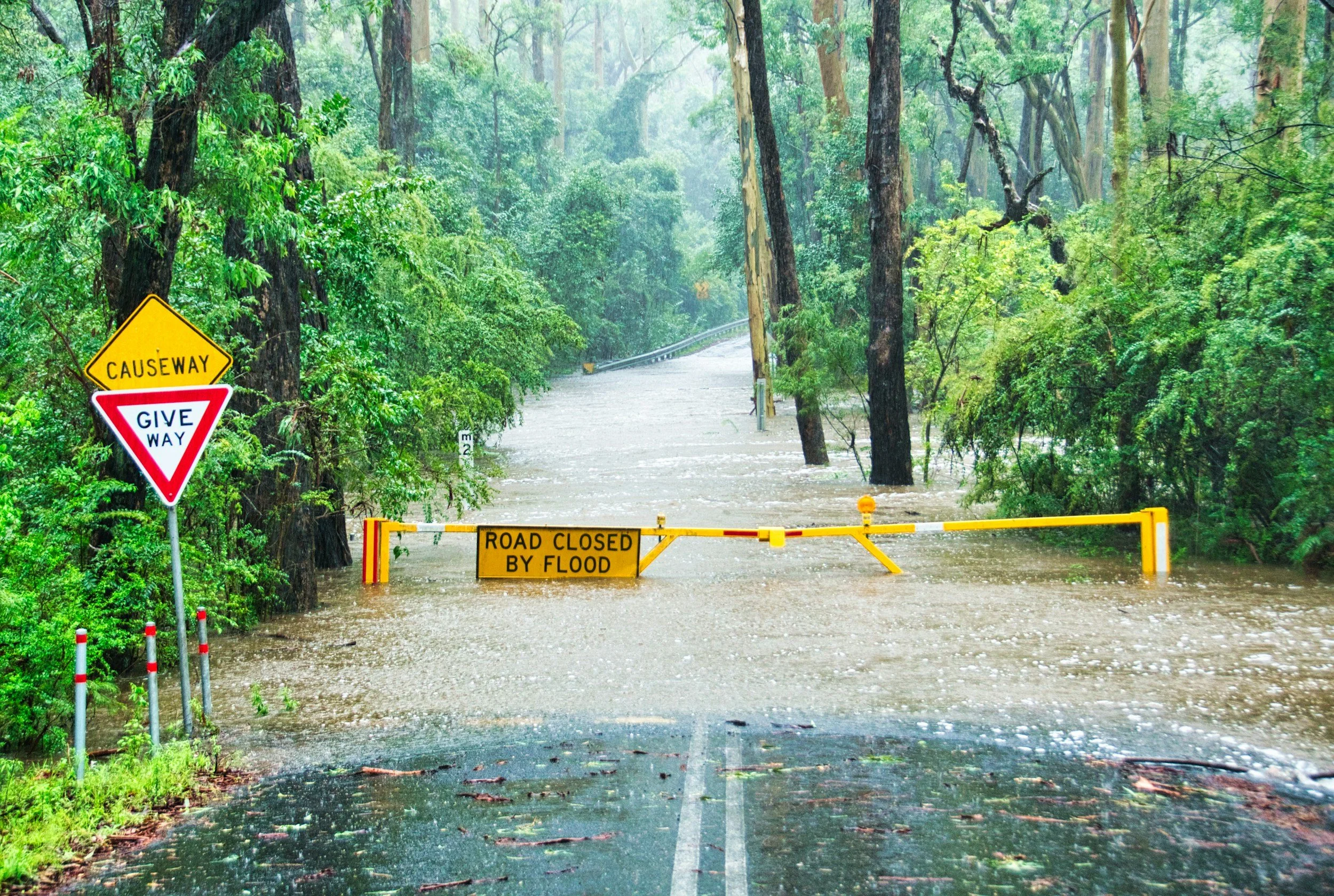
Australia faces escalating physical climate risks that are already affecting productivity, infrastructure, asset values, insurance affordability and fiscal stability.
Natural disasters cost the economy approximately $38 billion each year*. This is projected to rise to at least $73 billion annually by 2060*. These impacts are increasingly visible across financial markets, with physical climate risk emerging as credit risk for banks, portfolio risk for investors and affordability pressure for insurance.
Tools to identify and reduce systemic risks across the economy, including investing in adaptation and resilience, are central to long-term economic stability. Evidence shows that every $1 invested in resilience can deliver approximately $9.60 in avoided losses*. However, investment remains limited and largely reactive.
*Costs projected to 2060 under current trajectories; Source: Insurance Council of Australia, 2025
Structural barriers are constraining investment, not capital availability
The challenge is not a lack of capital, but a lack of systems, structures and coordination to deploy it effectively.
Adaptation and resilience investments generate system-wide benefits such as avoided losses and productivity gains, while upfront costs often fall on individual asset owners or investors. Data gaps, inconsistent definitions, limited project pipelines and a lack of aggregation mechanisms continue to constrain private investment.
Priority areas
for financing adaptation and resilience
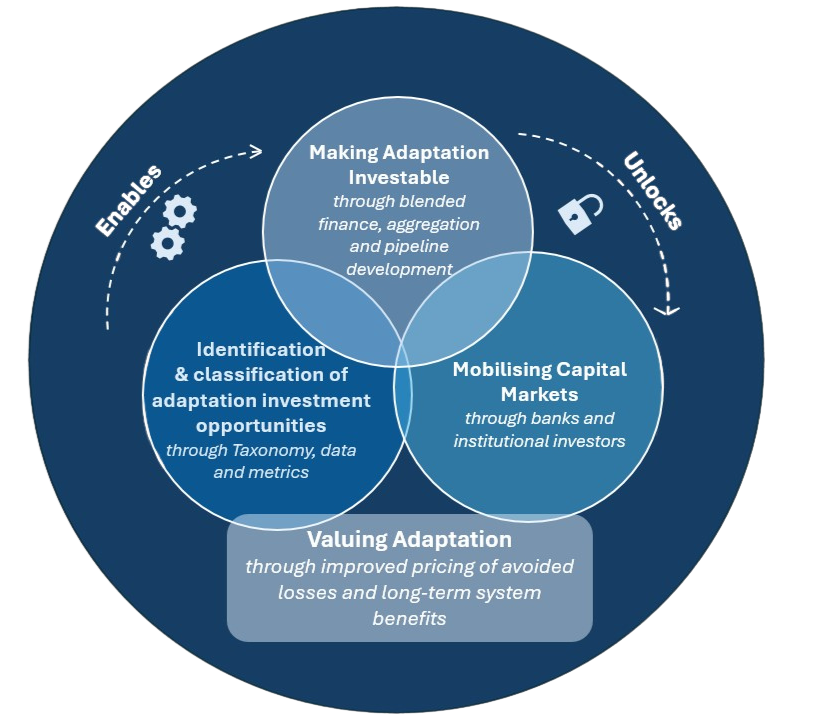
Four priority areas have been identified by key stakeholders across the financial system to support financing for adaption and resilience. These actions require collaboration across finance, government, business and civil society.
From priorities to action
With a strong track record of convening cross-sector collaboration to unlock finance and investment, ASFI is well placed to help drive the following priority actions:
Building Market Infrastructure: Taxonomy Expansion
Stronger market infrastructure is required to enable consistent identification, assessment and financing of adaptation activities. Expansion of the Australian Taxonomy is a key enabler to identify actions and activities across Australia’s economy that can reduce systemic risks and support capital allocation to adaptation and resilience solutions at scale.
Making Adaptation & Resilience Investible
While opportunities exist, many projects are not investment-ready due to weak revenue pathways, early-stage risk and pipeline gaps.
Through our work on blended finance, ASFI will explore the deployment of risk-sharing mechanisms, including concessional finance and structured public–private partnerships to support investment in adaptation and resilience.
Mobilising Capital Markets
Through our standards and market practice work program, ASFI will work with members across the finance sector to support application and integration of frameworks into market practices to embed resilience into financial decision-making and support the scaling of capital to adaptation and resilience.
Research
Early market insights from ASFI’s Taxonomy Implementation Program reveal strong demand to expand the Australian Sustainable Finance Taxonomy to include climate adaptation and resilience — a low-cost, high-impact way to unlock private capital for Australia’s transition.
The Australian Sustainable Finance Taxonomy is the first in the world to cover the mining sector, and now ASFI is once again breaking new ground, after being engaged to explore science-based methods for developing draft taxonomy nature criteria for agriculture, forestry and land management – sectors critical to biodiversity, water, pollution management and national resilience.
The Australian sustainable finance taxonomy provides a common language for green and transition finance in Australia, supporting the allocation of capital towards activities that enable Australia’s net zero ambitions.
The Australian Sustainable Finance Institute (ASFI) is pleased to launch the second and final round of public consultation on the development of an Australian sustainable finance taxonomy.
ASFI is pleased to launch the first round of public consultation on the development of an Australian sustainable finance taxonomy.
This month, ASFI was on the ground in Indonesia exchanging valuable knowledge on sustainable finance taxonomies with Indonesian Government representatives.
ASFI has today published two methodology papers as we take a further step towards the development of Australia’s sustainable finance taxonomy.
This report identifies key considerations to inform the methodology for integrating transition activities in an Australian taxonomy. The report’s findings were informed by and adapted from the most advanced transition methodologies currently under development internationally, as well as international best practice on transition financing and disclosures.
This report provides recommendations on the core design elements for an Australian taxonomy. Through a public consultation process that helped inform the report, ASFI found there is broad consensus on the core design elements of an Australian taxonomy, including in relation to credibility; usability; interoperability; and prioritisation and impact. Consultation also revealed strong support for the inclusion of a transition category in an Australian taxonomy.
This paper provides recommendations on the design of an Australian sustainable finance taxonomy, and the roadmap and timeline for its immediate development. The paper is informed by stakeholder consultation, the Australian economic and environmental context and insights gained through the development of the taxonomy project’s Scoping paper of international taxonomies.
This report compares taxonomy frameworks used in 13 jurisdictions internationally with similar economic compositions and needs to Australia, and identifies lessons to inform the development of an Australian taxonomy.
Insights
One year after releasing Version 1, early evidence of market adoption shows how of the Australian Sustainable Finance Taxonomy is being applied across the financial system.
The final Sydney roundtable in the Australia-China sustainable finance dialogue series, supported by the National Foundation for Australia-China Relations, brought together practitioners from Government, finance, academia and the real economy to explore the path forward for sustainable finance cooperation.
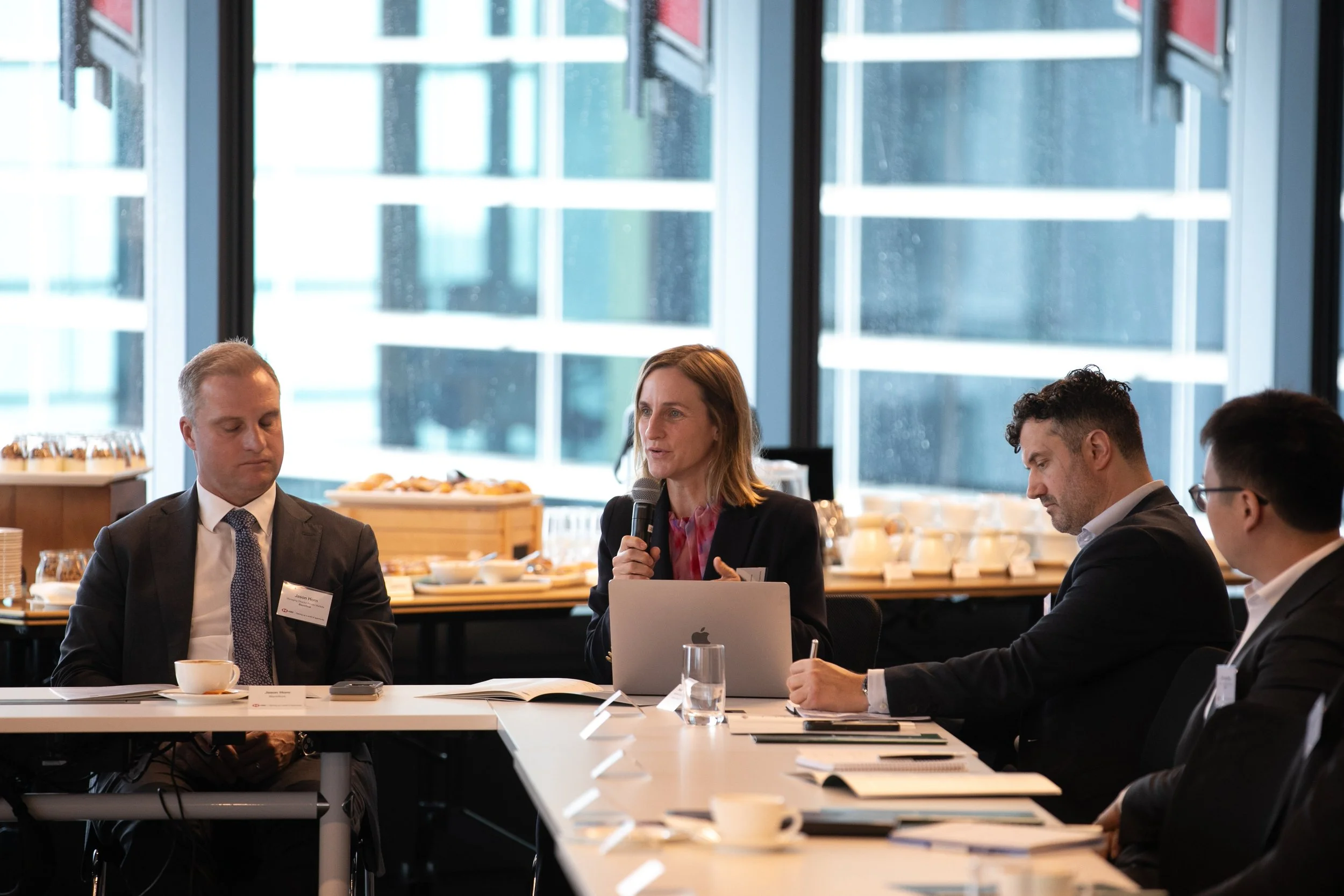
ASFI marked the release of new debt guidance at an event convening professionals from major banks, central financing agencies, Treasury bodies, superannuation and investment organisations, and other institutions involved in the development, assessment and issuance of labelled debt.
ASFI has released first of its kind guidance for issuance of taxonomy-aligned use-of-proceeds debt, developed in collaboration with representatives from Australian Treasury, Australia’s sovereign and semi-sovereign debt managers, and New Zealand Treasury.
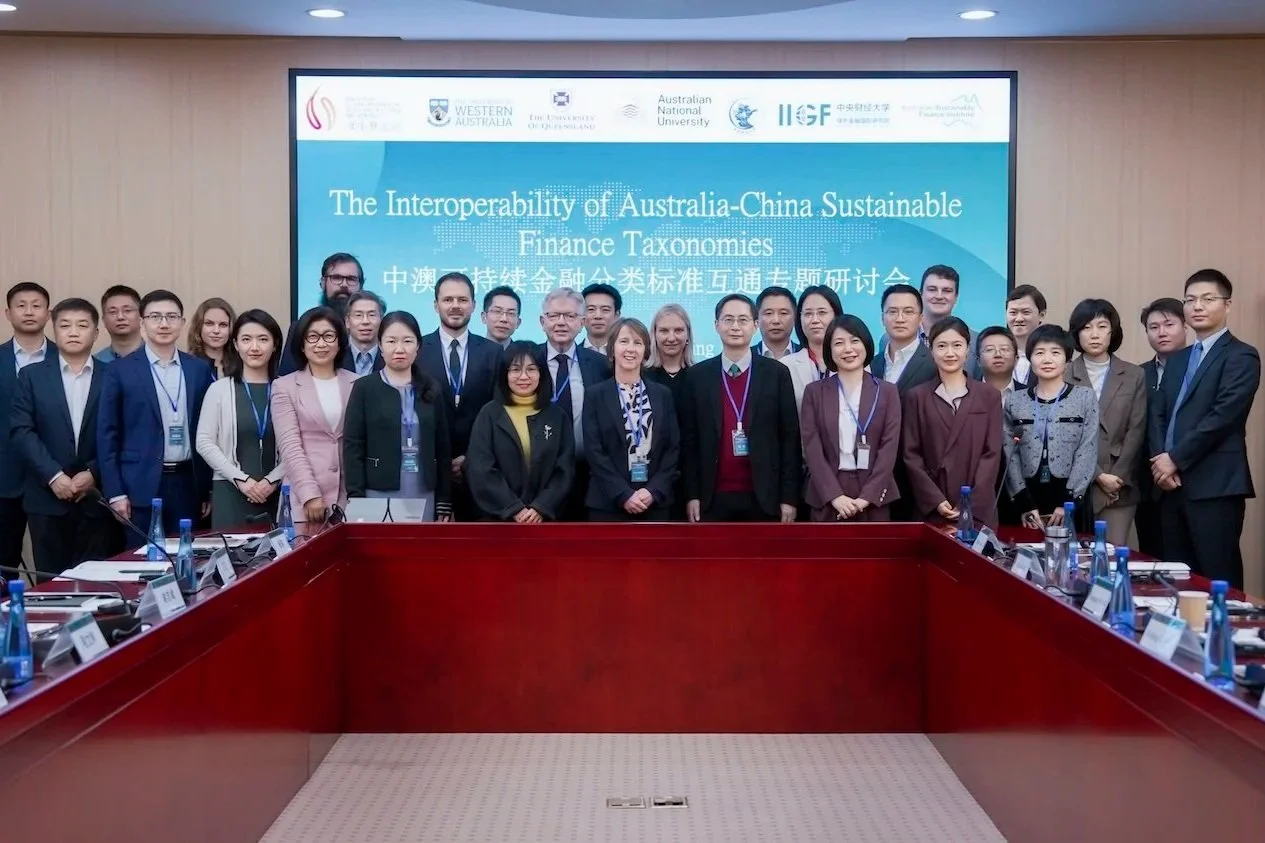
ASFI and a consortium of Australian and Chinese partners have convened the third workshop in the Australia-China sustainable finance dialogue series in Hong Kong SAR.
A new Actuaries Institute report strengthens the case for expanding the Australian taxonomy to include adaptation and resilience, aligning with ASFI’s market insights that credible criteria are needed to guide investment into Australia’s long-term climate resilience.
Financial institutions join a growing push to expand the sustainable finance taxonomy beyond green bond use, to unlock global investment in Australian sustainable projects.
Speaking the same language in sustainable finance is about more than definitions, it’s about unlocking cross-border capital flows by making frameworks comparable. This was the focus of ASFI’s recent visit to Beijing, for an expert panel session and workshop discussion.
The Australian Sustainable Finance Institute (ASFI) has today released Integrating Nature into Finance, a new research report commissioned by the Department of Climate Change, Energy, the Environment and Water (DCCEEW) with strategic support from the Treasury and the Department of Agriculture, Fisheries and Forestry (DAFF).
As the dust settles on London Climate Action Week 2025, the Australian Sustainable Finance Institute (ASFI) delegation returns home energized and inspired. Over four packed days, the delegation engaged with global leaders in sustainable finance, sharing Australia’s progress and learning from international peers.
Australia and China share deeply complementary economies, with a strong trade relationship that has driven robust growth for decades. This relationship is poised to undergo significant change, with demand for less carbon-intensive products requiring fundamental changes to key industries.
The first roundtable of the Australia-China Sustainable Finance Taxonomy Roadmap project brought together experts from leading Australian and Chinese institutions to identify a path toward closer alignment of Australian and Chinese sustainable finance settings
The Australian Sustainable Finance Institute (ASFI) has today released the second and final public consultation paper for the Australian Sustainable Finance Taxonomy (the Taxonomy).
The Australian Sustainable Finance Institute (ASFI) and its partner organisation in Aotearoa New Zealand, The Centre for Sustainable Finance: Toitū Tahua (CSF), welcome renewed commitment from Australian and New Zealand Ministers to work together on sustainable finance approaches in Australia and New Zealand, and in international fora.
Earlier this month, Purdie Bowden (Program Lead; Policy and Sustainable Finance Solutions), represented ASFI on the international stage in Singapore. Read her highlights and reflections.
The Australian Sustainable Finance Institute (ASFI) has today released a public consultation paper for the Australian Sustainable Finance Taxonomy (the Taxonomy).
This month, ASFI was on the ground in Indonesia exchanging valuable knowledge on sustainable finance taxonomies with Indonesian Government representatives.
Australia’s first Sustainable Finance Capability Framework has entered its next stage of development, marking a significant advancement for sustainable finance in Australia.
The Australian Sustainable Finance Institute (ASFI) is pleased to have commenced the development phase of the Australian sustainable finance taxonomy with the appointment of the Taxonomy Technical Expert Group (TTEG).
The Australian Sustainable Finance Institute (ASFI) welcomes the Government’s decision to co-fund ASFI to lead the development of an Australian sustainable finance taxonomy. The taxonomy will provide a common standard for 'sustainable’ finance, channelling more capital to support Australia’s climate transition and achieve Australia’s emissions targets.
In December 2022, ASFI released our ‘Australian Framing Paper: Designing Australia’s sustainable finance taxonomy’ as a draft for public consultation. Today, we are proud to share the final paper providing recommendations on the design of an Australian sustainable finance taxonomy, and the roadmap and timeline for its development.
The Australian Sustainable Finance Roadmap (ASFI Roadmap) called for a sustainable finance taxonomy to urgently shift new and existing capital into activities that create and better support sustainable and equitable outcomes for Australia.
Today we’re proud to release our International framing paper: Analysis of international taxonomies and considerations for Australia.
This report, informed by engagement from our Technical Advisory Group, Government and regulators, and officials from jurisdictions across APAC, Europe and North America, highlights the purpose, principles and key objectives to inform the design of an Australian Taxonomy and identifies the need for it to be science-based and credible.
We are currently seeking EOIs from individuals with suitable experience, knowledge and interest to join the Technical Advisory Group for the ASFI Taxonomy Project. The Technical Advisory Group (TAG) is an expert group of key financial market stakeholders and subject matter experts who will provide technical input to the ASFI Taxonomy Project.
Work Programs
-
Public Policy
ASFI is actively engaging with the Australian Government on a range of policy areas to support the flow of finance and investment for climate, nature, and social outcomes in Australia.
Leveraging our deep public sector expertise and strong government relationships, ASFI drives and supports policy reform for better climate and sustainability outcomes.
-
Sustainability Standards and Practice
ASFI’s standards and practice work predominantly supports Australian financial institutions to pilot the Australian Sustainable Finance Taxonomy in practice.
ASFI works in partnership with the Australian Government and members to inform future guidance and uses, and on the international harmonisation of taxonomies.
ASFI is actively promoting Australia's approach to green and transition finance through a range of bilateral and multilateral fora, and as technical and private sector partner to the Australian Government.
-
Blended Finance
Blended finance, where public investment helps de-risk projects and crowd in private investment, is a key tool for decarbonisation and climate resilience. Effective blended finance structures to accelerate the flow of capital into projects and organisations that deliver sustainable outcomes.
This work program is being undertaken in partnership with Government, in particular the Department of Foreign Affairs and Trade (DFAT), and the ACCC has granted ASFI formal authorisation to work with institutions and governments on co-designing new blended finance structures.
-
Leadership and Capability
ASFI is committed to embedding sustainability into leadership and practice across the financial services landscape, and is actively working to unlock financial institution skills, leadership, and ambition on sustainable finance.
Leadership is critical to sharpening organisational focus on sustainability, driving internal buy-in and culture, and facilitating action across the real economy. ASFI works in partnership with the Australian Government, members and others to deliver targeted courses, mentor programs, working groups, member delegations and a Capability Framework.
-
First Nations and Finance
ASFI is positioned to act as a partner to First Nations-led businesses, Peaks, projects, Nations and communities, as lasting impact depends on First Nations leadership being centred and supported, not substituted.
This approach embeds First Nations rights in financial decision-making; increases access to finance and support for First Nations communities and businesses; elevates First Nations perspectives and priorities across Australia’s financial system; and ensures more First Nations peoples in Australia benefit from economic self-determination.