Labelling with confidence: the practical application of the Taxonomy in issuing use-of-proceeds debt
On Tuesday 24 March, ASFI’s Sustainability Standards and Practice team released first of its kind guidance on issuing use-of-proceeds debt under the Australian Sustainable Finance Taxonomy. The guidance, designed to support issuers, investors and reviewers in applying the taxonomy in practice, provides clearer expectations as the market continues to evolve.
The launch event for the guidance was held at an event co-hosted by ASFI and taxonomy pilot participant Moody’s, bringing together representatives from across the market for a briefing and panel discussion on the next phase of sustainable debt in Australia.
The audience of attendees from major banks, central financing agencies, Treasury bodies, superannuation and investment organisations, and other institutions involved in the development, assessment and issuance of labelled debt, reflected how sustainable debt is no longer a niche conversation.
This was also the logic behind the development of the guidance itself, in providing a practical guide for implementation that could act as an enabler of scale, confidence and comparability.
Australian Labelled Debt Market Context
Australia’s labelled debt market has matured rapidly, with cumulative sustainable debt issuance exceeding AUD 100 billion[1], spanning sovereign, semi-government, financial institution and corporate issuers.
Issuance has expanded beyond green bonds to include sustainability and sustainability-linked instruments, reflecting both transition financing needs and investor appetite. A key milestone was the Australian Government’s inaugural green bond issuance via the Australian Office of Financial Management, which reinforced labelled debt as a core funding tool rather than a niche product. This issuance supported liquidity, investor diversification and market confidence.
Globally, labelled bond markets have continued to grow, with cumulative issuance exceeding USD 6 trillion [2], but recent commentary from ratings agencies highlights that future growth will be increasingly driven by credibility, transparency and consistency, rather than volume alone.
This context underscores the relevance of the Australian taxonomy-aligned labelled debt guidance as market infrastructure, providing a common reference point that supports transparency for investors and clarity for issuers as the market continues to scale.
The Taxonomy as market infrastructure
After a short presentation on the release of the guidance from project lead Michael Dolan, the discussion moved to a panel moderated by Executive Manager of Standards and Practice Nicole Yazbek-Martin, with Richard Lovell, Executive Director of the Clean Energy Finance Corporation (CEFC), Jeffrey Lee, Senior Vice President of Sustainable Finance at Moody’s APAC, Trang Trinh, the Head of Sustainability at Victoria’s Treasury Corporation and Katharine Tapley, Global Head of Sustainable Finance at ANZ.
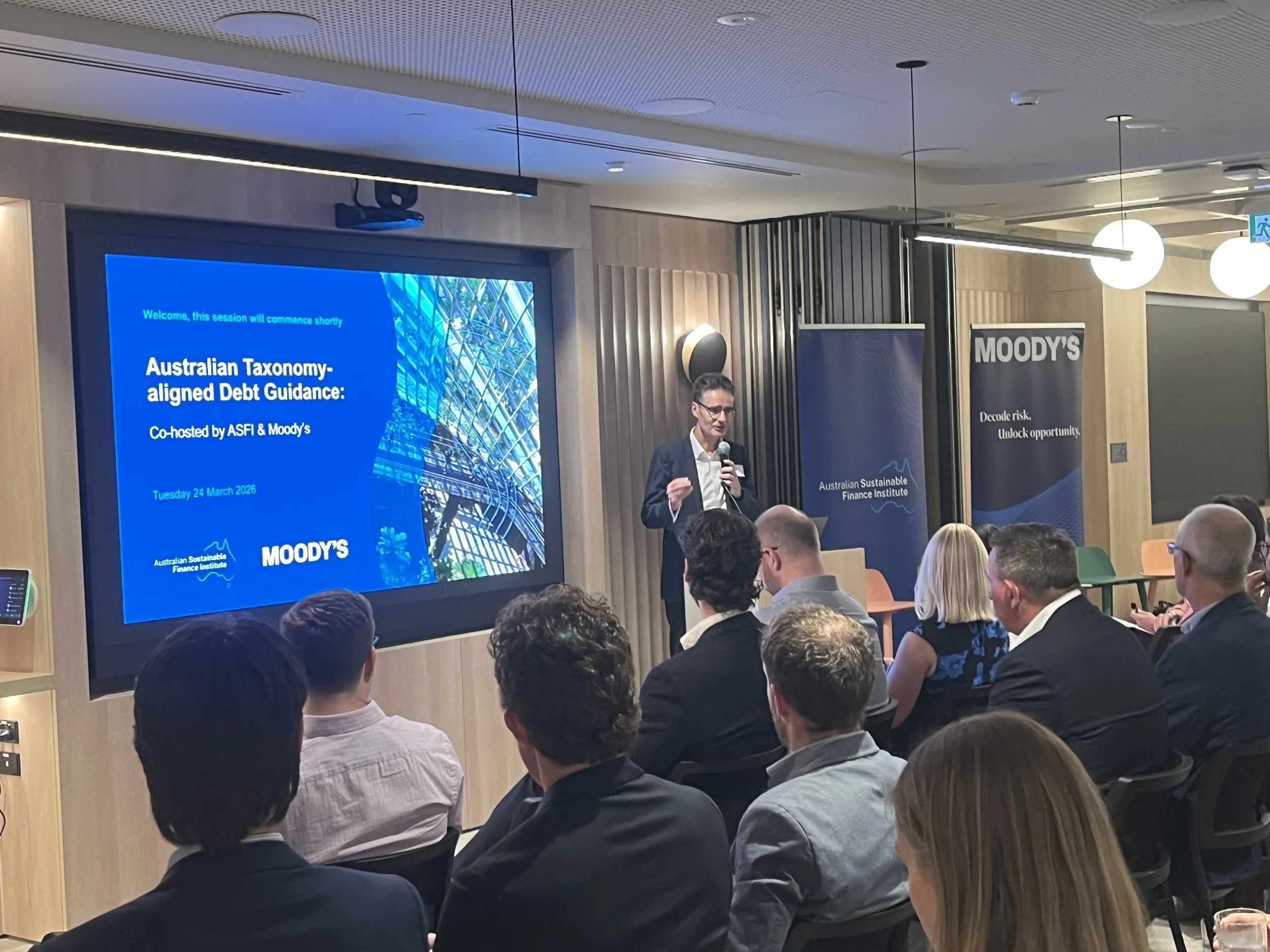

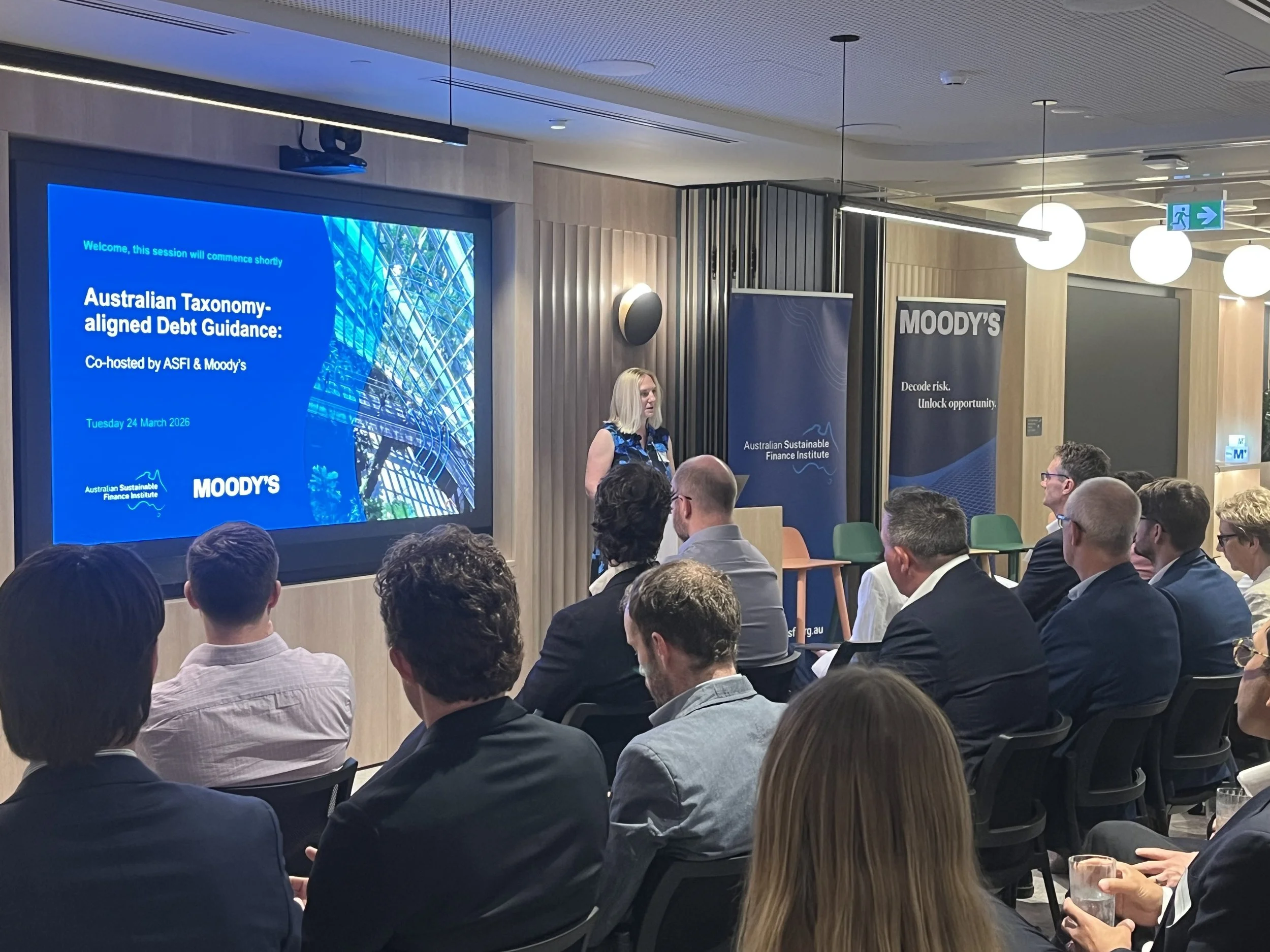
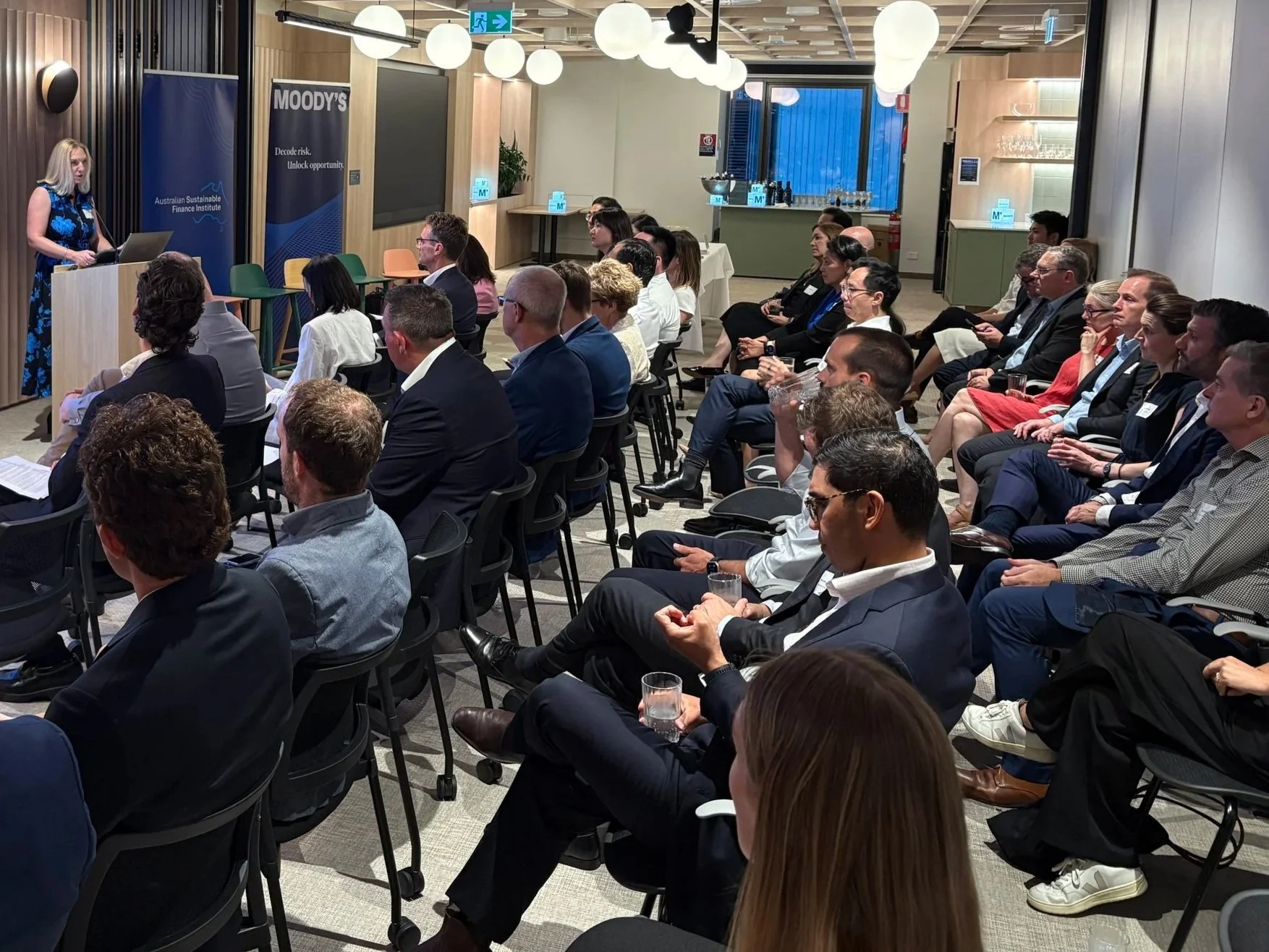
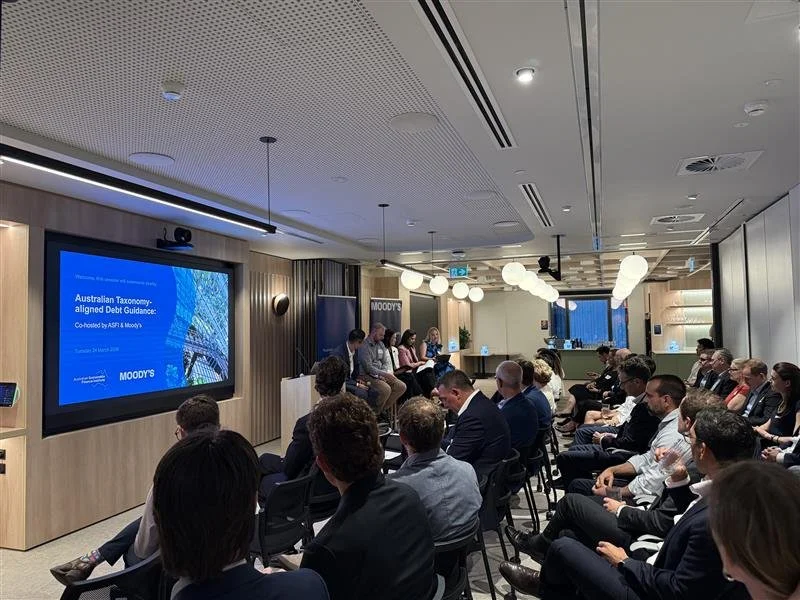
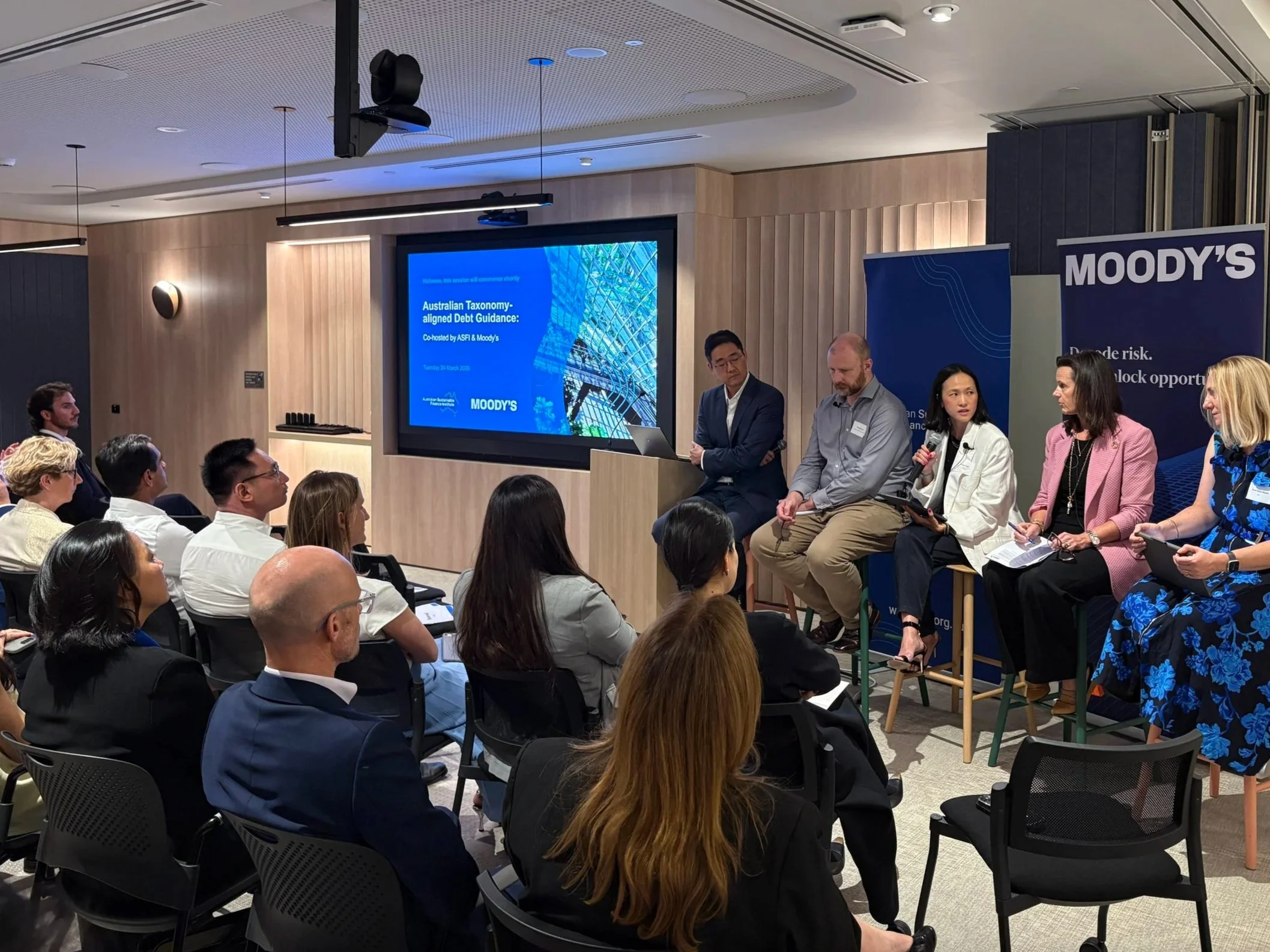
The panel discussed the importance of the guidance not just as a standalone achievement, but as a step forward in market infrastructure that could reduce fragmentation, support consistency and provide issuers, investors and reviewers a more stable basis for labelling decisions.
Richard Lovell noted that the taxonomy added to the mosaic of elements to help progress the market, and that taxonomy-alignment ‘short circuits’ the need to demonstrate credibility. There was also a clear view that investor demand for green and sustainable debt remains strong, with ANZ’s Katharine Tapley revealing that amongst the strong liquidity in the market at the moment, the green label of ANZ's recent bond issuance is what helped it to remain competitive.
The panellists noted that as the market matures, the need for stronger alignment between labelled structures and the underlying activities they finance will continue to grow, and that the guidance can support this by providing a common reference point. In practical terms this matters, as it changes the conversation between issuers, second-party opinion providers and investors. This is because It makes it easier to compare apples with apples and also lowers the dependence on bespoke internal frameworks that might work for one transaction, but do less to support confidence across the market as a whole.
What came through most clearly was that none of this is static.
The guidance has been released at a point when the taxonomy itself is beginning to move from development to use in real economy scenarios, and when the market is testing what that practical application looks like. There was also recognition that uptake at scale will depend on more than guidance alone. Shared frameworks make it easier to make better decisions, and poorer claims harder to sustain, but policy settings, market practice and institutional capability will all influence how quickly the market moves.
New taxonomy-aligned issuance
The wider sense of momentum was reinforced by a new taxonomy-aligned issuance in the market, as Meridian Energy launched a seven-year green kangaroo bond in AUD, with ANZ, Commonwealth Bank of Australia and Westpac Institutional Bank as the lead managers.
The transaction was issued under Meridian’s February 2026 green finance framework and supported by a second-party opinion from DNV. As Nicole Yazbek-Martin noted,
“This is a useful example of where the market is heading. One deal on its own doesn’t establish a trend, but it does show the taxonomy is appearing in live transactions rather than remaining a policy concept or technical reference point in the background.
“The guidance is now public, the market is starting to use it and the conversation is shifting from whether a taxonomy exists, to how it is applied in practice and what else is required to support a more credible next phase of labelled debt in Australia.”