ASFI Newsletter – September 2023
September 28, 2023
ASFI Newsletter – Summit Wrap-up 2023
October 31, 2023
In this member exclusive blog post, we are proud to bring you comprehensive insights from our 2023 Australian Sustainable Finance Summit.
This year, over 350 attendees from across finance, business, government, civil society, and academia came together to unpack this year’s theme; ‘driving ambition: Australia’s time to lead’.

Highlights
In an exclusive welcome from the Assistant Treasurer, the Hon. Stephen Jones MP, outlined the Government’s sustainable finance strategy, expected for release in the coming weeks. He also underscored the collaborative effort needed between Government and industry to achieve our sustainable finance ambitions:
“We have a big agenda, and we can’t do it alone. It has to be a collaborative effort. We know you’re all committed and ambitious for what Australia can achieve, and you know that we are ambitious as well.”
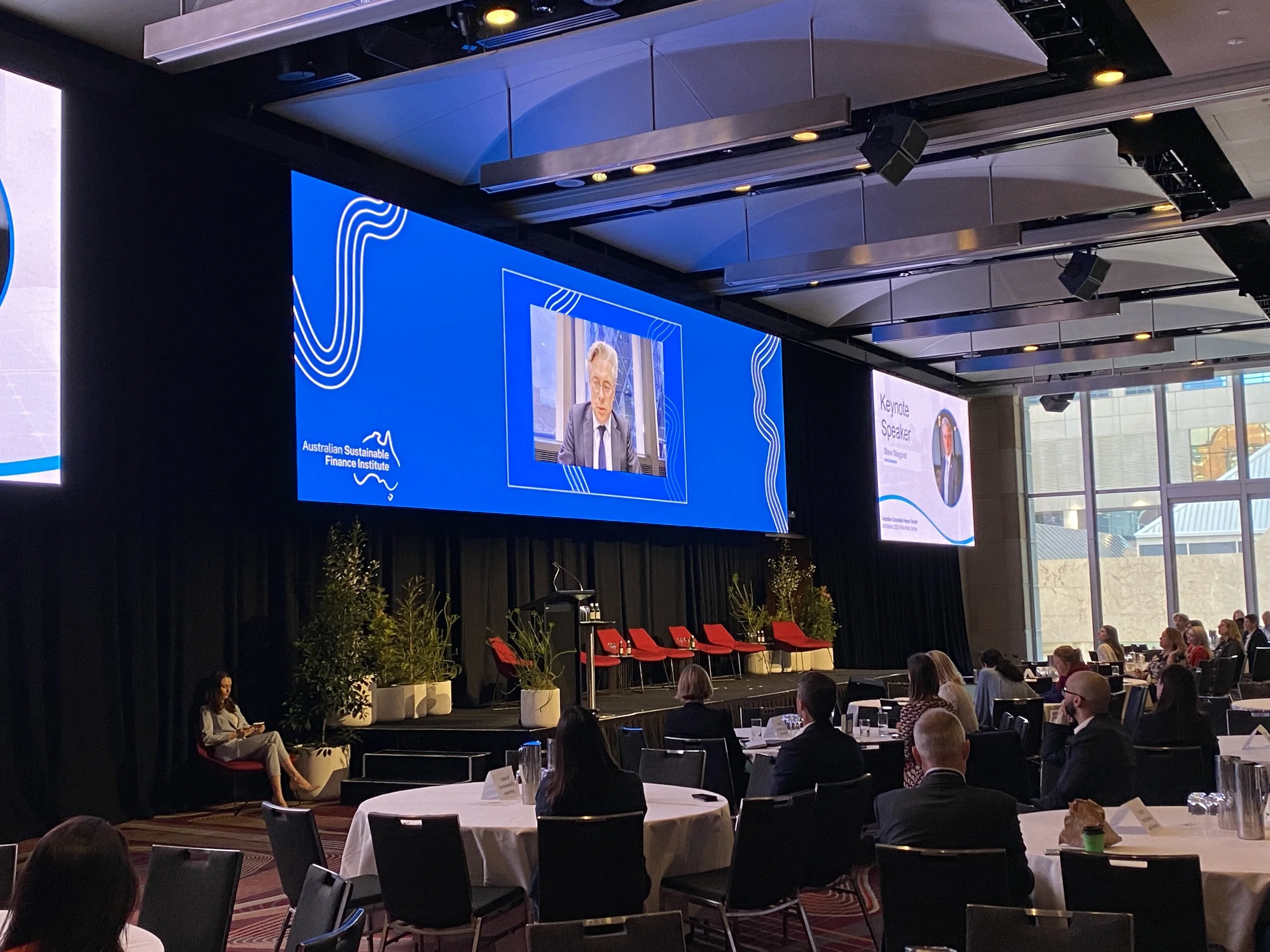
Steve Waygood, Chief Responsible Investment Officer of Aviva Investors, then delivered an inspiring keynote address which unpacked our 2023 theme “ambition”. He particularly highlighted to attendees that it is within our ability to drive change, and there are examples of change already happening around the globe. But there is more that needs to be done to deliver the $4-6 trillion needed for a smooth and just transition to net zero.
“We all need to raise our game. Not just engage with companies, not vote at the AGM, but we need to engage with the system. We need to understand it using systems thinking and then analyse it, look at the impediments within the system and then seek to address it. A new level of thinking is possible.”
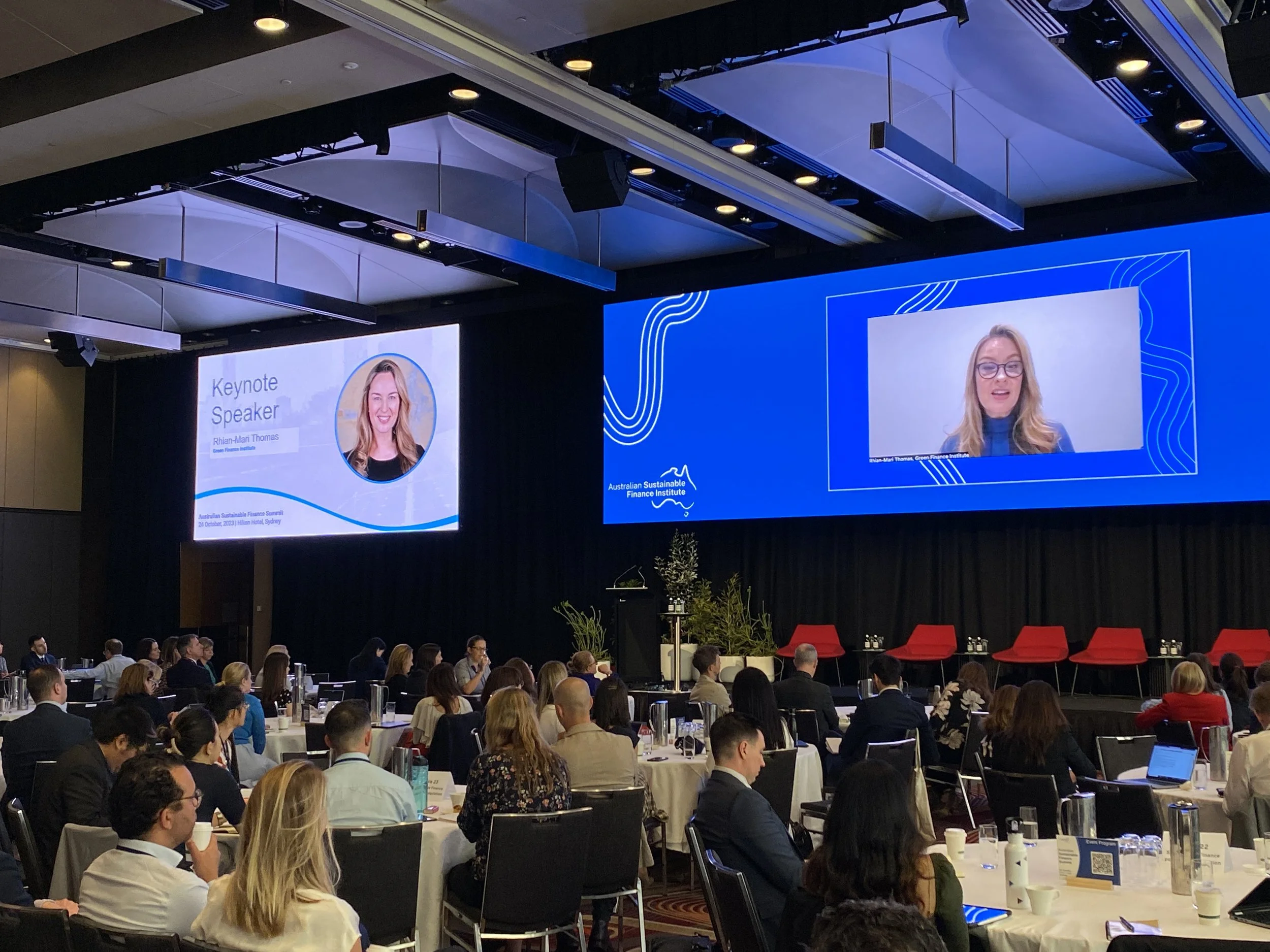
In the second session of the day, attendees had the opportunity to gain insights from international and Australian experts Dr Rhian-Mari Thomas, CEO of the Green Finance Institute, and Ian Learmonth, CEO of the Clean Energy Finance Corporation, on the need for financial innovation as a driver for climate action.
Rhian-Mari Thomas outlined the work of the UK Green Finance Institute in bridging the ‘execution gap’ between the commitments and intentions of private capital, and the genuine bankable opportunities to achieve climate and social goals. She underscored the need for multi-stakeholder collaboration, and the right institutional approach.
“This is a really exciting time for financiers, not to sit and wait for standardisation and regulation to tell us what to do, but for us to do what we’re best at – which is finding solutions to problems and using our financial expertise, working closely to make sure regulation and policy is supportive, fit for purpose, and actually enabling us to crowd in capital.”
In an insightful fireside chat with ASFI CEO Kristy Graham, Ian Learmonth highlighted the role of the CEFC in catalysing private capital into clean energy and climate mitigation in Australia:
“Deploying publicly sponsored capital through the CEFC is about creating the right risk return environment for private capital to flow… by creating a clear investment framework for the private sector, it is able to come in on its own terms.”
Ian said there is a growing appetite for state sponsored green financing globally. At home, Ian said the CEFC would work closely with the newly established National Reconstruction Fund which has been modelled on the CEFC.
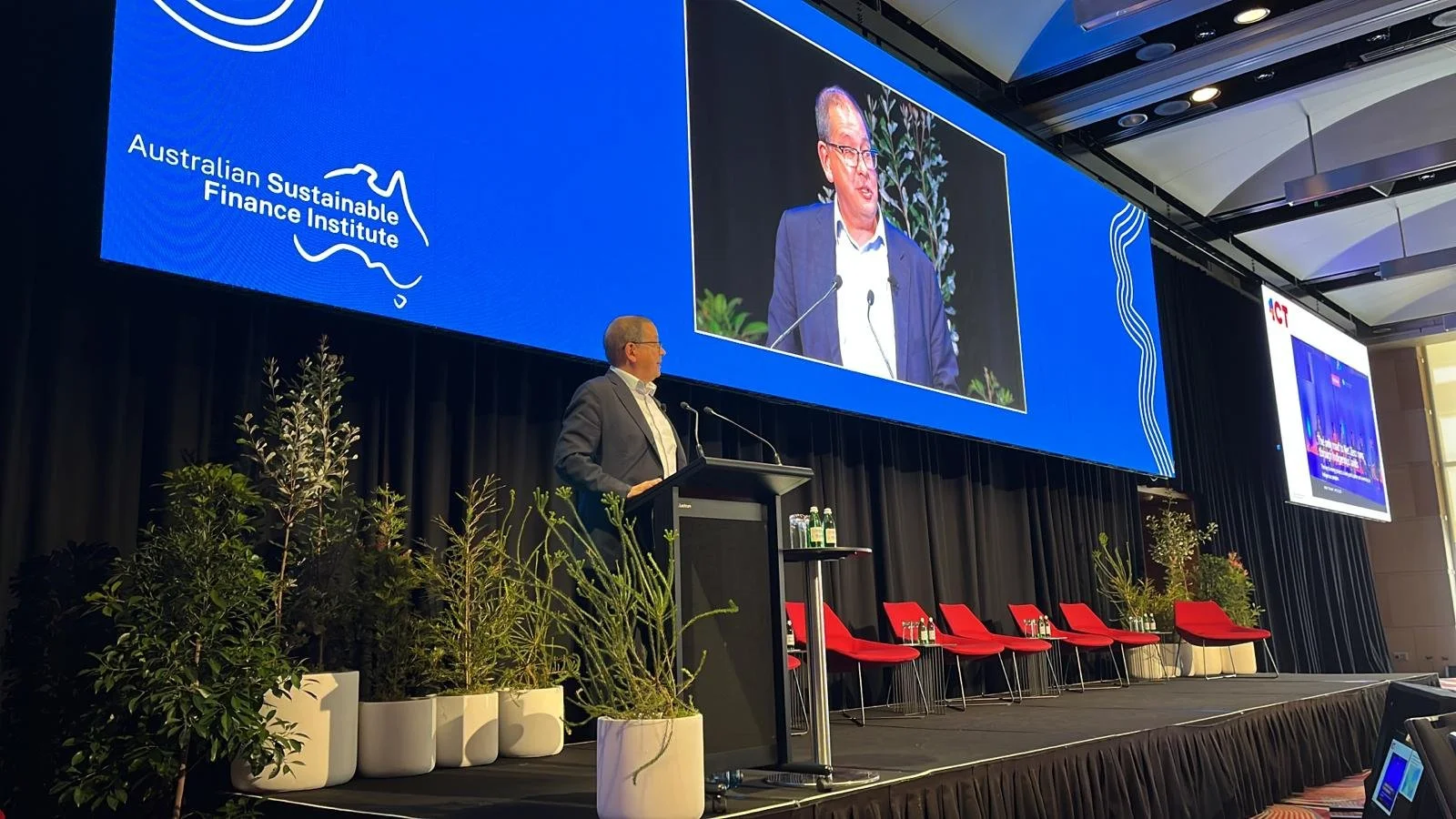
We also heard from Mark Podlasly, Chief Sustainability Officer at Canada’s First Nations Major Project Coalition, who gave a unique international perspective into equity partnerships with First Nations communities. He outlined the work of the First Nations Major Project Coalition, the differences and similarities between the Canadian and Australian contexts, and opportunities for Australia to learn from experience. “The road to net zero runs through Indigenous lands.”
Read below for a comprehensive summary of the day, including:
-
Key developments and progress in sustainable finance building on ASFI’s 2023 Sustainable Finance Progress Tracker;
-
industry-leading insights on the need for financial innovation to accelerate climate and sustainability outcomes;
-
engaging discussions covering how leadership from governments and financial institutions can drive progress on emerging issues such as natural capital and First Nations rights and opportunities;
-
how the ASFI-led Australian sustainable finance taxonomy can support credible transition activity; and
-
the outcome of our much-anticipated “Great Debate”, which sought to unpack the question: Should our journey to a sustainable, resilient and inclusive financial system be measured and achievable or hard and fast?

Event Wrap-Up
The State of Sustainable Finance in Australia
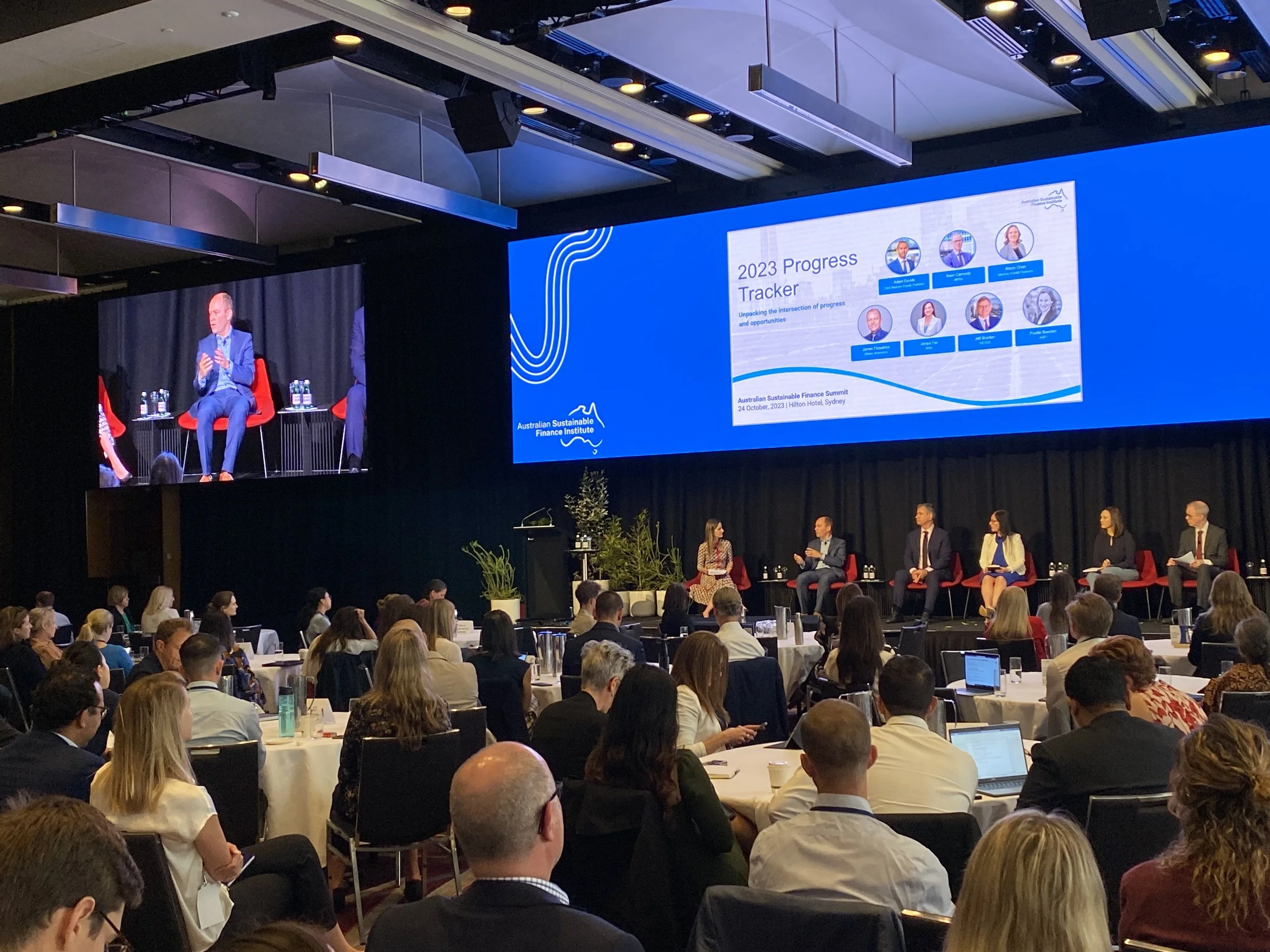
The opening panel session took stock of developments in sustainable finance over the last 12 months.
ASFI’s Policy and Sustainble Finance lead, Purdie Bowden, presented key findings from ASFI’s 2023 Sustainable Finance Progress Tracker. ASFI’s third report on implementation of the Australian Sustainable Finance Roadmap found that Australia is heading in the right direction on sustainable finance but needs to accelerate progress.
“We have seen another step-change in Australian sustainable finance over the past 12 months, this time driven by the Australian Government. But there is more to do.
The 2023 Progress Tracker again demonstrates those areas where industry, government, regulators and civil society still need to drive faster, stronger progress towards ASFI’s vision of a sustainable, resilient and inclusive financial system. This means more courageous leadership, more investment in capability, more collaboration, and better coordination.”
Purdie was then joined on stage by sustainable finance experts from across the sector to share their insights on the state of sustainable finance.
Adam Davids, Managing Director of First Nations Equity Partners, emphasised the need for greater participation and more equitable opportunities for Indigenous Australians within the financial system. He pointed to persistent gaps between Indigenous and non-Indigenous Australians. Adam said there has never been more attention on First Nations People and argued there are ways for the finance sector to ensure greater representation of First Nations people, beyond a Voice to Parliament.
“The challenge that I see is we’re often chasing red flags. We’re often chasing damage once it’s been done. We need to be focusing on more strategic issues rather than putting out fires.”
Sean Carmody, Executive Director of APRA, commented on the work of APRA in managing sytem-wide climate risk including through its Climate Vulnerability Assessments with banks and insurers. Sean said APRA has seen significant progress across the finance industry on how they approach and engagement with climate risk and opportunity: climate is no longer seen as the responsibility of sustainability teams and is becoming much more integrated throughout organisations.
Returning panellist Alison Chan, Investment Director – Sustainable Finance at Metrics Credit Partners, reflected on her wish for greater capacity building at our inaugural Summit in 2022. She agreed with the Progress Tracker findings that capability remains a significant challenge. She also made the case for mandatory transition plans in supporting companies to translate high level commitments into action.
Jacqui Fox, Chief Climate Officer at NAB, said banks were demonstrating leadership through initiatives such as the Net Zero Banking Alliance target setting process, and participation in the development of the Australian sustainable finance taxonomy. She outlined how NAB is building climate literacy across the organisation, noting the need to tailor training to suit the needs of particular roles, and to expect capability building to take time.
James Fitzpatrick, Chief Technical Officer at Allianz, returned to our 2023 theme of ‘ambition’ by highlighting opportunities for Australia to lead rather than follow – we have the “ingredients” but need to seize the opportunities available. He also talked about the critical role of the insurance sector in the financial system.
Jeff Brunton, Head of Portfolio Management at HESTA, noted the need for a dramatic increase in debt financing to enable the net zero transition. He said deployment will require coordination and innovation. Jeff underscored the importance of Government support for a comprehensive sustainable finance taxonomy to support capital allocation for the transition.
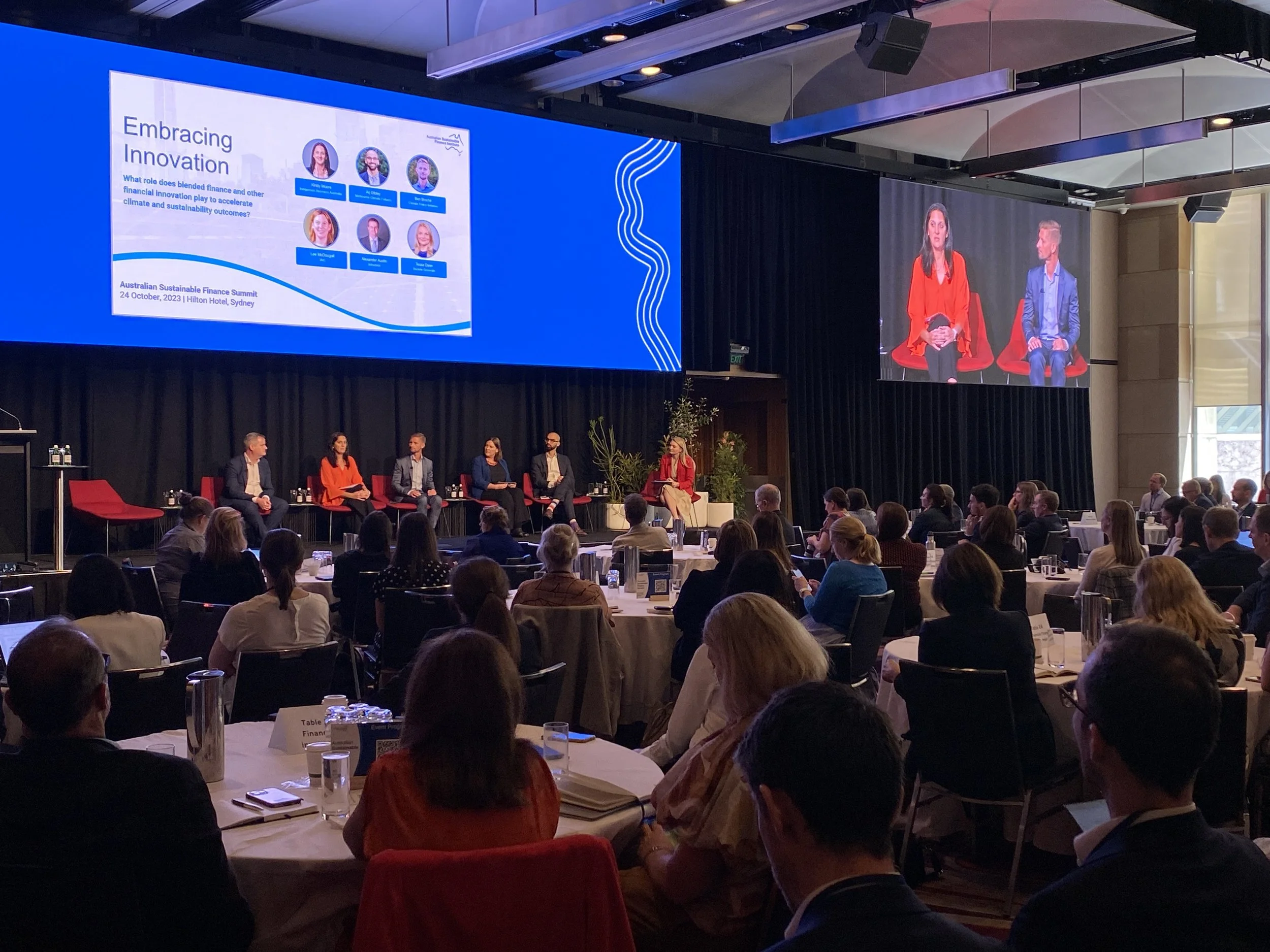
Embracing innovation: What role does blended finance and other financial innovation play to accelerate climate and sustainability outcomes?
Achieving ASFI’s bold plan of reshaping Australia’s financial system requires equally bold and innovative approaches to finance. In this session, we explored how models of financial innovation are currently being used in Australia and abroad to advance sustainability objectives, and where there are opportunities for future innovation.
Off the back of insights from leaders in financial innovation, Dr Rhian-Mari Thomas, CEO of the Green Finance Institute, and Ian Learmonth, CEO of the Clean Energy Finance Corporation, panellists dived into the what, why and how of financial innovation.
Dr Arj Dibley, Head of Sustainable Finance Hub at Melbourne University’s Melbourne Climate Futures, brought attention to the inspiring innovative solutions already being used on the sustainability impact side. He also highlighted where innovation in sustainable finance can make most impact:
“When we think about innovation in the finance sector, we often anchor to product or service innovation. In sustainable finance, what’s really critical is process innovation.”
Kirsty Moore, CEO of Indigenous Business Australia (IBA), outlined the IBA’s leading and innovative approach to lending for First Nations Australians, which is distinct from commercial banks in terms of risk assessment, customer engagement, products and loan terms.
“We are very focused on transition…we want a world where Indigenous Business Australia doesn’t exist. We want to move from government intervention to mainstream finance.”
Ben Broché, Associate Director – Climate Finance at the Climate Policy Initiative, unpacked the need for blended finance to help finance to flow for climate solutions, especially in emerging markets.
“Blended finance models can support a step change in private capital and play a role in building resilience and enabling a just transition around the world.”
In response to a question regarding how his organisation is innovating to support deployment of climate solutions, Alexander Austin revealed that Infradebt is focusing on transactions that do not neatly fit into the financial structures of the big banks, such as project finance for battery storage.
“Rather than changing a project to meet the needs of debt, our focus at Infradebt is about understanding what the project actually needs and structuring the debt to serve that.”
Lee McDougall, Head of Group Sustainability & Climate Action at IAG, stressed the need to explore opportunities to accelerate climate resilience through insurance products in Australia and beyond. She spoke to the range of initiatives the insurance industry is undertaking, including through the Insurance Council of Australia, to support better understanding of risk, innovation of products, and a more comprehensive policy response – including through planning and building codes reform.
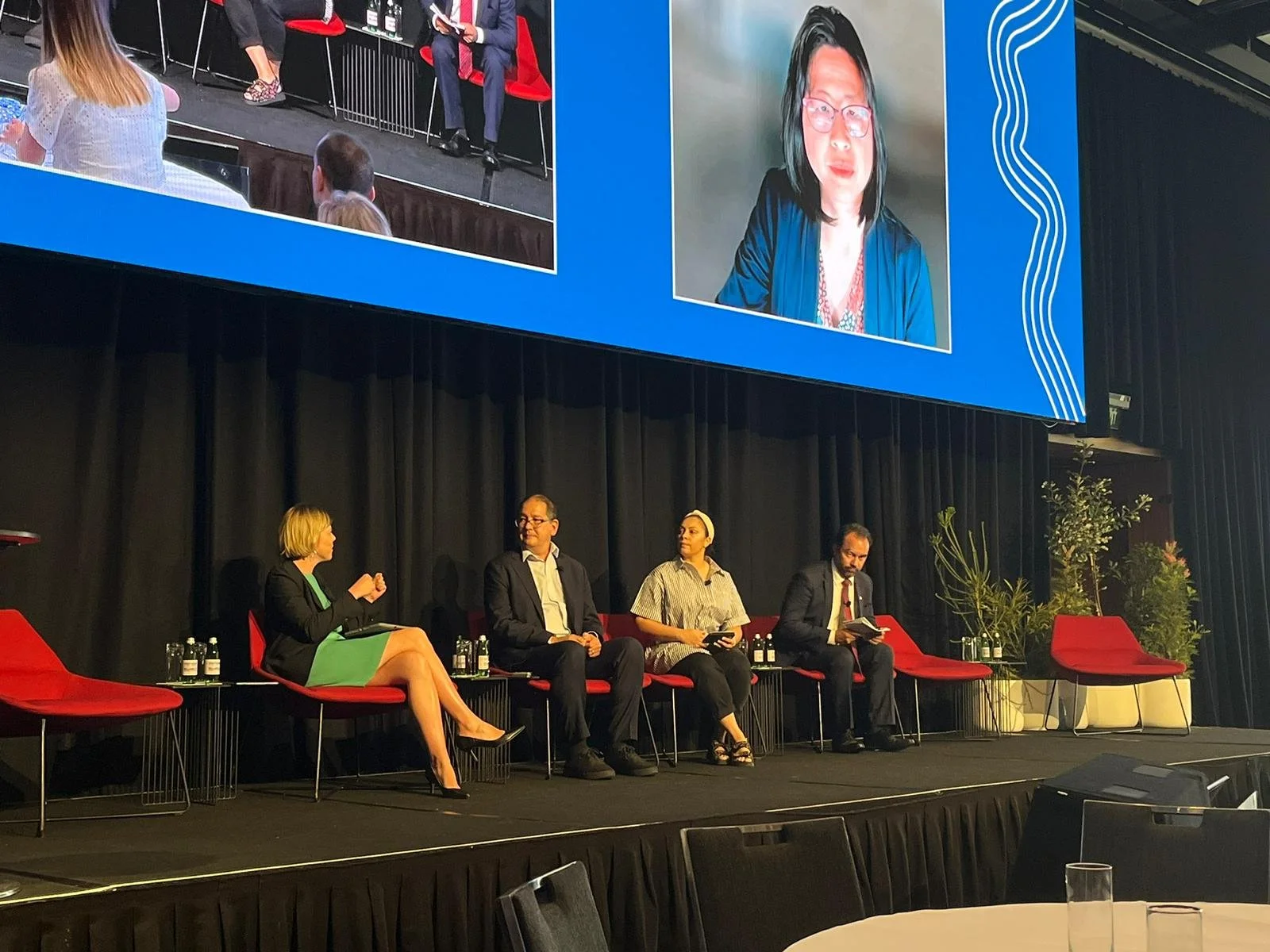
Economic Reconciliation: How the finance sector can support economic self-determination for First Nations Australians
Economic opportunities for Australia’s First Nations communities have never been greater – with the energy transition providing a significant opportunity for communities if land use agreements move beyond free prior and informed consent towards partnerships between companies, investors, financiers and communities.
Following the international learnings highlighted by keynote speaker, Mark Podlasly, this panel discussion explored what the next generation of agreements looks like, the role of the finance sector in supporting communities in this process, and how organisations are working together to support economic self-determination.
Ben Ainsworth explained the important role of land rights in providing economic opportunities to First Nations communities but also stressed the need to ensure First Nations people are able to take full advantage of those land rights.
Referencing the recent referendum result, Mark Podlasly told attendees that the Voice isn’t the only avenue to support economic self-determination – there are investors and the market which will demand good is done on the ground.
Bec Blurton emphasised partnership as crucial to achieving a step change in economic reconciliation.
“We should all aim for partnership. In partnerships, both parties are equal, we’re looking out for each other, we’re looking to collaborate and move forward together.”
Executive Director of Impact Investment Partners, Janice Morris, presented two perspectives for the finance sector to reframe its starting position and identify win-wins. Firstly, to value Aboriginal cultural perspectives as if they are legal landowners; and, secondly, to consider and articulate the value that Indigenous people can bring to a project.
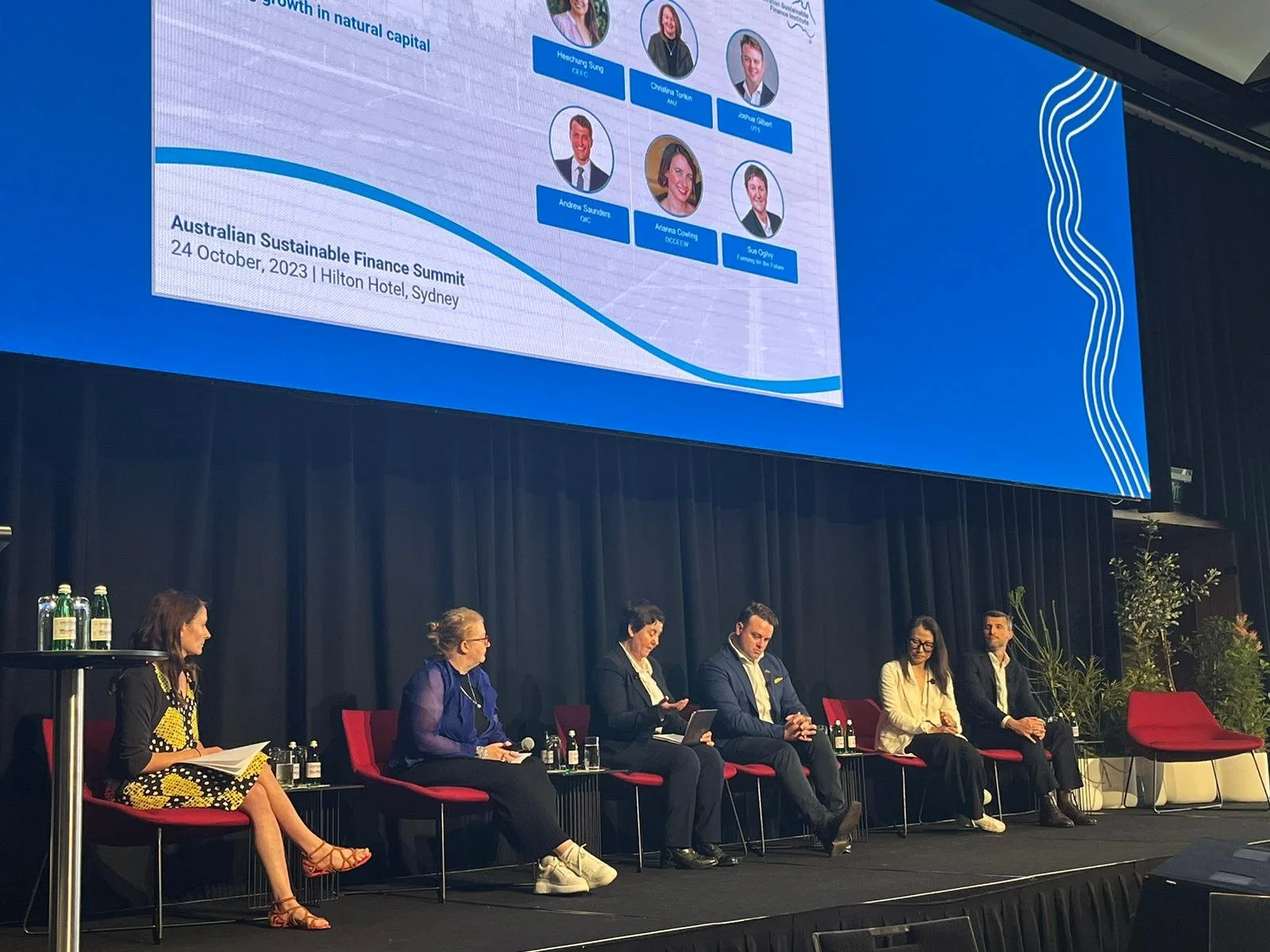
Stewards of the Land: Financing growth in natural capital
Our fifth session of the day opened with an insightful fireside chat between Dr Sue Ogilvy, Program Director of Farming for the Future at the Macdoch Foundation, and Joshua Gilbert, Policy Officer (Indigenous Policy) at the Jumbunna Institute of the University of Technology Sydney. The two discussed the relationship between natural capital and economic performance, and revealed how the integration of scientific evidence and research and First Nations’ knowledge and understanding of Country can help to accelerate this understanding and ensure healthy resilience landscapes into the future. Joshua concluded the fireside chat with the following thought-provoking statement:
“On my death bed, I want to say my mob has farmed this land for 60,000 years, and I want to be able to say that while I was alive I did something to be able to continue farming this land for the next 60,000 years; and for us to do that we need to do it together.”
Following this conversation, panellists built on insights shared to explore how we can integrate natural capital into financial decision making and incentivise an uplift in our natural environment.
Asset managers Heechung Sung, Head of Natural Capital Investments at the Clean Energy Finance Corporation (CEFC), and Andrew Saunders, Head of Natural Climate Solutions at Queensland Investment Corporation (QIC), provided attendees with an overview of how assets are being managed to drive better natural capital outcomes.
Heechung brought to our attention that investing in nature is “investing through the lens of forever” and that this investment is not only for conservation purposes, but also investment for the transformation of Australia for a low carbon future. Meanwhile, Andrew highlighted that land needs active management, which presents massive opportunities to work with First Nations’ peoples to manage the land and achieve positive outcomes.
Christina Tonkin, Managing Director of Corporate Finance for Institutional Banking at ANZ, spoke to the need to work collaboratively across sectors on innovative solutions. She reminded us that we don’t need to wait for the Global Nature Positive Summit (planned for 2024 in Sydney), government’s initiatives and standardisation in reporting to act, as she put it: “we can get out there and innovate already”.
Joshua Gilbert urged that we can’t wait any longer and must use the policy levers we already have to support First Nations’ peoples and farmers on the ground to help boost the whole economy forward.
Arianna Cowling, Director of Nature Finance and Markets at the Department of Climate Change, Energy, the Environment and Water added the Australian Government’s perspective to provide an overview of the current focus and initiatives in progress to develop and support investment in nature. She noted that there is no ‘one policy approach’ that can fix the complex changes that are needed.
Sue Ogilvy brought the session to a close by sharing encouraging preliminary findings from Farming for the Future’s research, which indicates that farms with higher natural capital are also the farms that have better business performance. She remarked:
“Nature can provide resources to us that bestow an economic benefit, but we need to provide services to nature as well.”
Talking Taxonomies and Driving Transition
ASFI’s Nicole Yazbek-Martin opened by setting the scene for the development of an Australian taxonomy, which was identified as an immediate priority for ASFI in the Australian Sustainable Finance Roadmap.
“A taxonomy comprised of robust, transparent and measurable criteria underpinned by science-aligned scenarios and demonstrated technological advances is critical to helping inform the market so that it can allocate sustainable capital with confidence.”
The panel commenced with reflections from Matteo Bigoni, Head of Taxonomies at the Climate Bonds Initiative. Matteo spoke about the high level of ambition he has observed in Australia during the taxonomy’s initial development phase. Ensuring the taxonomy is science-based, aligns with the Paris Agreement goal of 1.5C, defines what a credible transition looks like and embeds First Nations rights and considerations into its design would make Australia a leader in this field, Matteo observed.
Brian Cahill described the benefit of a taxonomy for Moody’s, at which he is Global Head of ESG. Brian described taxonomies as a building block, explaining that in order to channel finance into sustainable activities, “you need to know what a sustainable activity is”.
Zak May, Executive Director of Strategy and Policy at IFM Investors, underscored the need to protect the long-term interests of beneficiaries, and the importance of designing a credible, science-based taxonomy to that end.
Charles Davis, Managing Director, Sustainable Finance at Commonwealth Bank, highlighted the instrumental role banks’ play in channelling capital towards more sustainable activities, assets and entities, and explained how a taxonomy will be ‘instrumental’ in addressing market fragmentation.
Emma Garlett, Industry Fellow at the University of Queensland’s Sustainable Minerals Institute, spoke to the importance of incorporating Free, Prior and Informed consent into the Australian taxonomy in order to achieve a just transition to net-zero.
Jo Kelly, CEO of New Zealand’s Centre for Sustainable Finance, brought expertise from across the Tasman to draw attention to opportunities for collaboration between Australia and New Zealand on taxonomy design. For New Zealand, “interoperability and credibility are paramount”, Jo noted.
Warren Tease, Chief Advisor, Financial Markets at the Australian Treasury wrapped up the session by sharing his thoughts on the importance of an Australian taxonomy and where it sits in relation to Australia’s broader sustainable finance architecture:
“The key theme is one of transparency. We need to improve the quality of information that markets have and ensure it is credible, comparable and easy for investors and regulators to use. That’s really where the taxonomy comes in: it’s about providing better quality information on climate and broader sustainability objectives. When I think about the taxonomy, I think about it in combination with the Australian Government’s climate disclosure reforms. They are two sides of the same coin.”
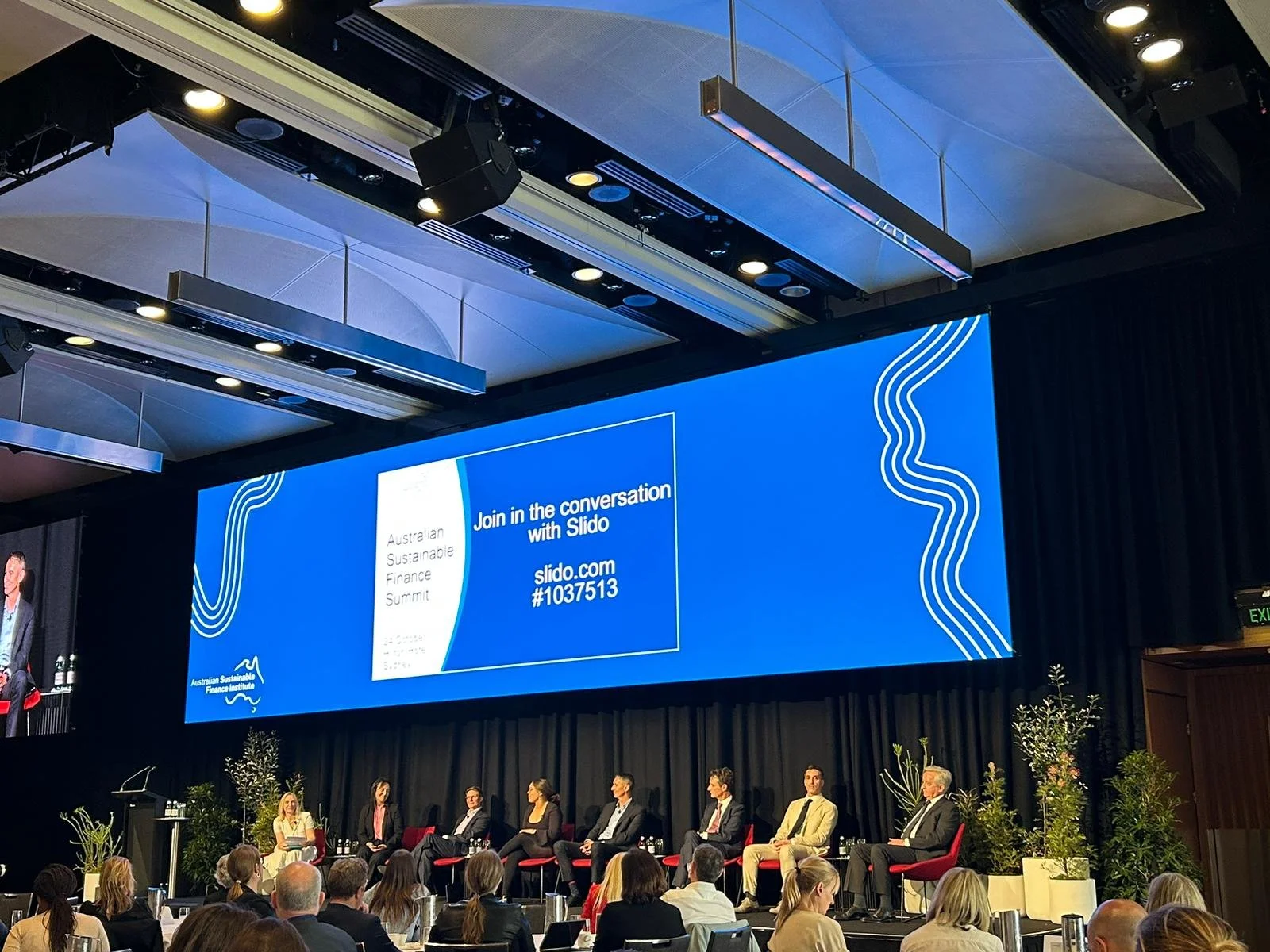
The Great Debate
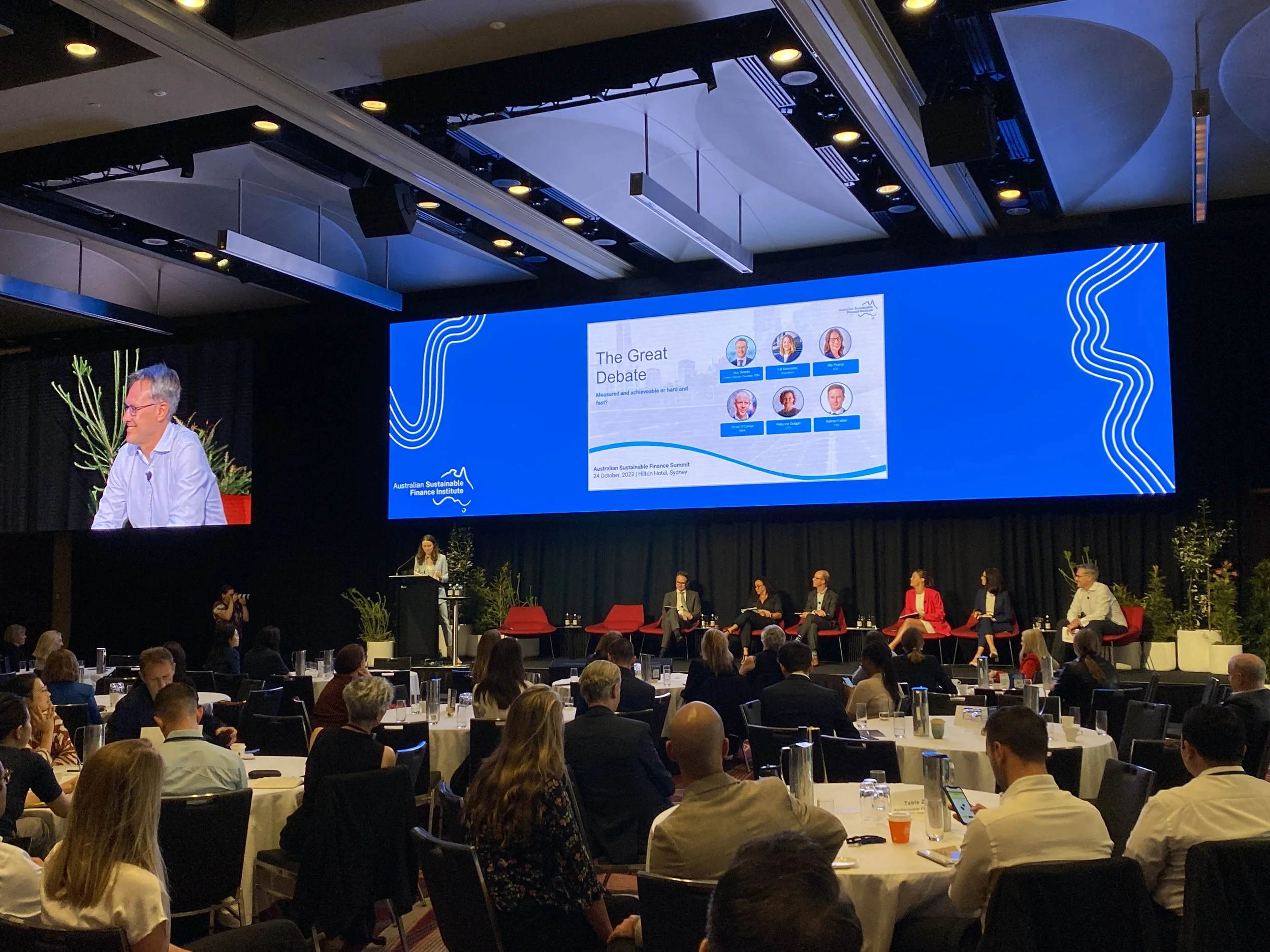
In the Summit’s closing session, we were joined by some of the greatest minds in sustainable finance grappling to debate whether a ‘hard and fast’ or ‘measured and achievable’ approach will ultimately deliver greater ambition.
Team A: “Hard and fast”
-
Dr Guy Debelle, former Deputy Governor of the Reserve Bank of Australia (RBA)
-
Kat Kimmorley, Head of Commercial and Investments at Boundless Earth
-
Alix Pearce, Senior Manager Climate and Social Policy at the Insurance Council of Australia (ICA)
Team B: “Measured and achievable”
-
Simon O’Connor, CEO of the Responsible Investment Association Australasia (RIAA)
-
Nathan Fabian, Chief Sustainable Systems Officer at Principles for Responsible Investment (PRI)
-
Robynne Quiggin, Pro-Vice Chancellor (Indigenous Leadership and Engagement) at the University of Technology Sydney (UTS)
Ultimately, both teams agreed on the need to go hard and fast, but to do that in a way that has integrity, brings all of the community along and maximises the social benefits of transition, particularly for First Nations Australians.
Key Takeaways
There were so many rich discussions across all sessions, where the hot topic of the day was our 2023 Summit theme: ‘ambition’.
We learned about practical examples, gained inspiration from abroad, heard what action is needed to achieve a step-change across climate, natural capital and social outcomes, and uncovered how the finance sector can work collaboratively with government, universities, NGOs and others to achieve this. As ASFI CEO Kristy Graham stated in her closing remarks:
“Leadership is a network of people, and we are all leaders. It is the strength and integrity of partnerships that will drive ambitious change in the sustainable finance sector.”
A huge thank you goes out to all attendees, speakers, and our generous sponsors for making this event possible, we look forward to seeing you again next year.
Latest News

October 25, 2023